FJORD / SYSTEM INTEGRATION DESK*DOCUMENT INDEX · REVISION CONTROL
Specification-led integration / demonstration

Interfaces first. Systems that belong together.

Define loads, operating conditions, responsibilities and acceptance evidence before equipment becomes a vessel system.

Start an integration review
Modern offshore service vessel underway in northern coastal waterBRIDGE & CONTROL
Interface group A*
WORKING DECK
Load case B*
POWER TRAIN
Configuration C*
REFERENCE CONFIGURATION*Example values require project review.
690 V*Main distribution
2 × 1.8 MW*Propulsion example
DP2*Illustrative class
−20 °C*Design condition
System taxonomy

A vessel is a set of managed interfaces.

Each row links a system purpose to its inputs, outputs and review evidence. Replace every example with verified engineering information.

01

Power & energy

Generation, storage, conversion and distributionView system →
02

Propulsion

Prime movers, drives, thrusters and controlsView system →
03

Automation

Monitoring, alarms, control and data exchangeView system →
04

Mission equipment

Deck machinery, handling and operational loadsView system →
Performance ledger / samples

A figure needs its conditions.

Separate engineered limits, expected operating ranges and contractual guarantees. Units and test conditions must stay visible.

PARAMETERCONFIGURATION A*CONFIGURATION B*CONDITION
Installed power3.6 MW*5.4 MW*Nominal example
Transit efficiencyIllustrative*Illustrative*Defined duty profile required
RedundancyN+1 example*Split bus example*Subject to class review
Ambient range−20 to +35 °C*−10 to +45 °C*Equipment-specific limits
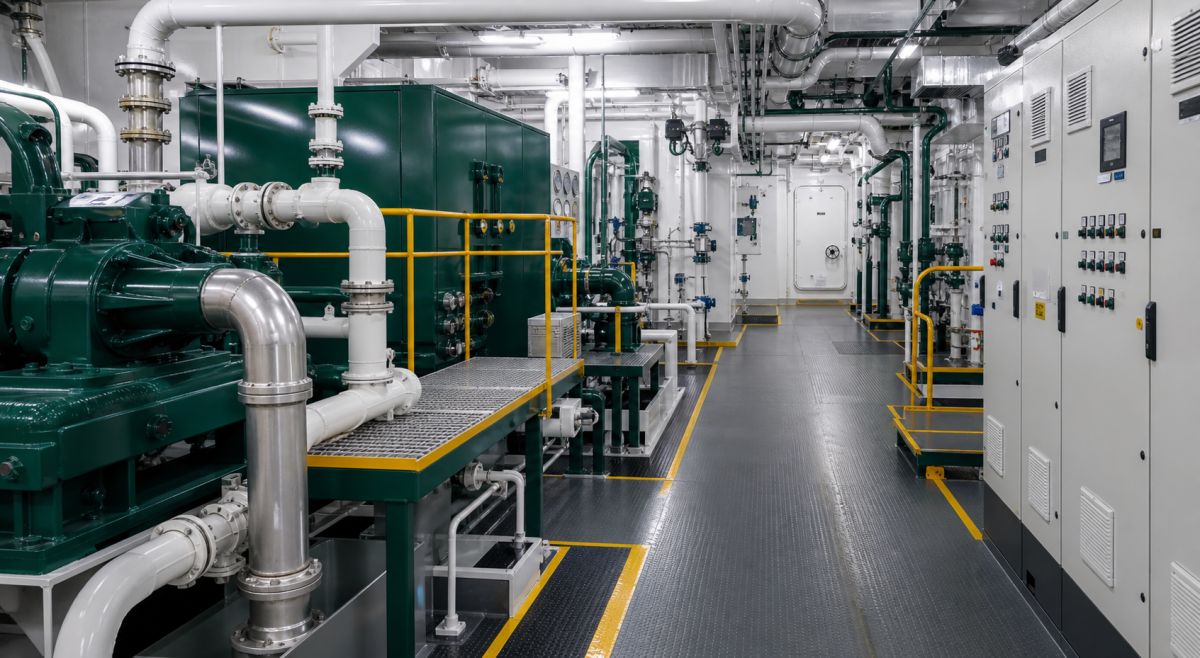
Orderly marine machinery room with pumps, pipes and electrical cabinets
Integration scope

From load list to accepted handover.

Real scope must identify owner, input, output, review gate and exclusion.

ARCHITECTUREOperating philosophy, load cases, redundancy and interface register.
ENGINEERINGCalculations, selection, layouts, cable and piping coordination.
VERIFICATIONFactory tests, harbor tests, sea trials and discrepancy closeout.
LIFECYCLEDocumentation, training, spares, service and controlled changes.
Integration workflow

Four gates, one controlled baseline.

Example sequence only. Project contracts and class requirements determine actual responsibilities and acceptance.

01

Frame the duty

Vessel mission, operating profile, constraints and stakeholders.

02

Resolve interfaces

Inputs, outputs, tolerances, ownership and change routes.

03

Verify the build

Inspection and test evidence against the approved baseline.

04

Control handover

As-built records, training, spares and open-item ownership.

Two marine engineers inspecting deck machinery aboard a service vessel
Project review

Bring the interface question, not the confidential drawing.

The public enquiry should collect only enough context to route a discussion. Move controlled specifications, vessel drawings and restricted information into an authenticated exchange.

Request initial review
Document register / examples

Current, owned and traceable.

Downloads need a title, revision, publication date, owner, file type, size and archive rule.

System integration overview*REV 03*PDF · 2.4 MB*Open →
Interface data checklist*REV 01*PDF · 880 KB*Open →
Service support scope*REV 04*PDF · 1.1 MB*Open →

Define the system boundary before the review begins.

Share the vessel type, duty, project phase and interface question.

Request review