Frame the duty
Vessel mission, operating profile, constraints and stakeholders.
Define loads, operating conditions, responsibilities and acceptance evidence before equipment becomes a vessel system.
Start an integration review BRIDGE & CONTROL
Each row links a system purpose to its inputs, outputs and review evidence. Replace every example with verified engineering information.
Separate engineered limits, expected operating ranges and contractual guarantees. Units and test conditions must stay visible.
| PARAMETER | CONFIGURATION A* | CONFIGURATION B* | CONDITION |
|---|---|---|---|
| Installed power | 3.6 MW* | 5.4 MW* | Nominal example |
| Transit efficiency | Illustrative* | Illustrative* | Defined duty profile required |
| Redundancy | N+1 example* | Split bus example* | Subject to class review |
| Ambient range | −20 to +35 °C* | −10 to +45 °C* | Equipment-specific limits |
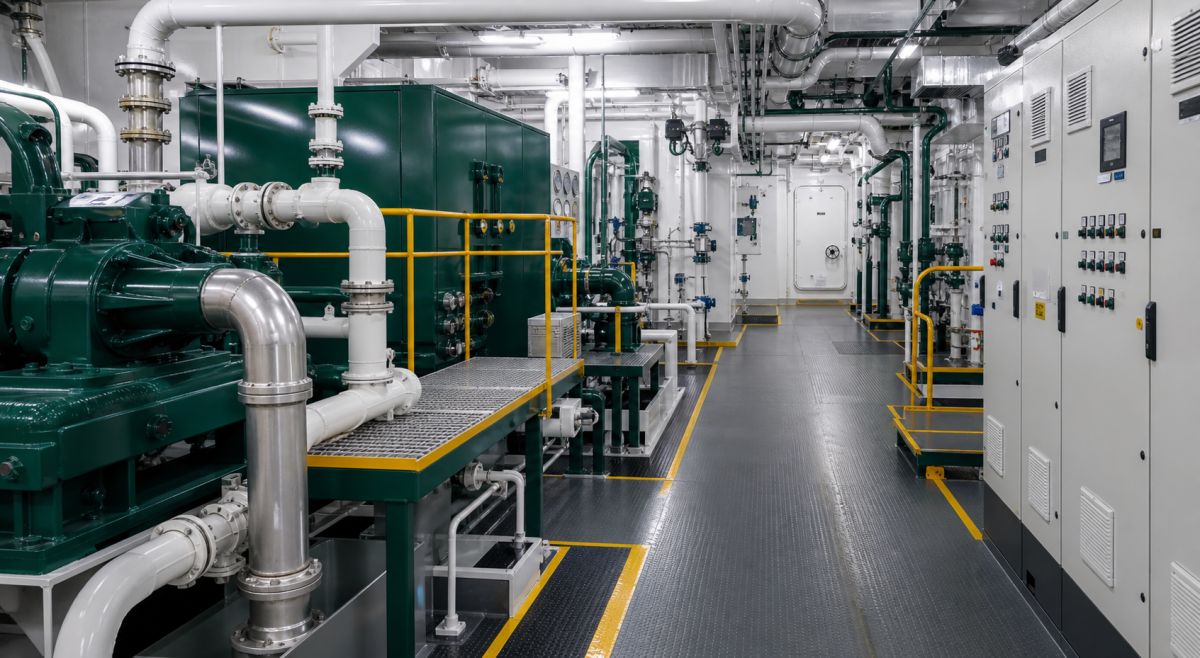
Real scope must identify owner, input, output, review gate and exclusion.
Example sequence only. Project contracts and class requirements determine actual responsibilities and acceptance.
Vessel mission, operating profile, constraints and stakeholders.
Inputs, outputs, tolerances, ownership and change routes.
Inspection and test evidence against the approved baseline.
As-built records, training, spares and open-item ownership.

The public enquiry should collect only enough context to route a discussion. Move controlled specifications, vessel drawings and restricted information into an authenticated exchange.
Request initial reviewDownloads need a title, revision, publication date, owner, file type, size and archive rule.
Share the vessel type, duty, project phase and interface question.
Request review