Arc Dental Rooms
A patient-centered dental practice template with need-based care pathways, first-visit guidance, transparent fees, prevention, and accessible booking
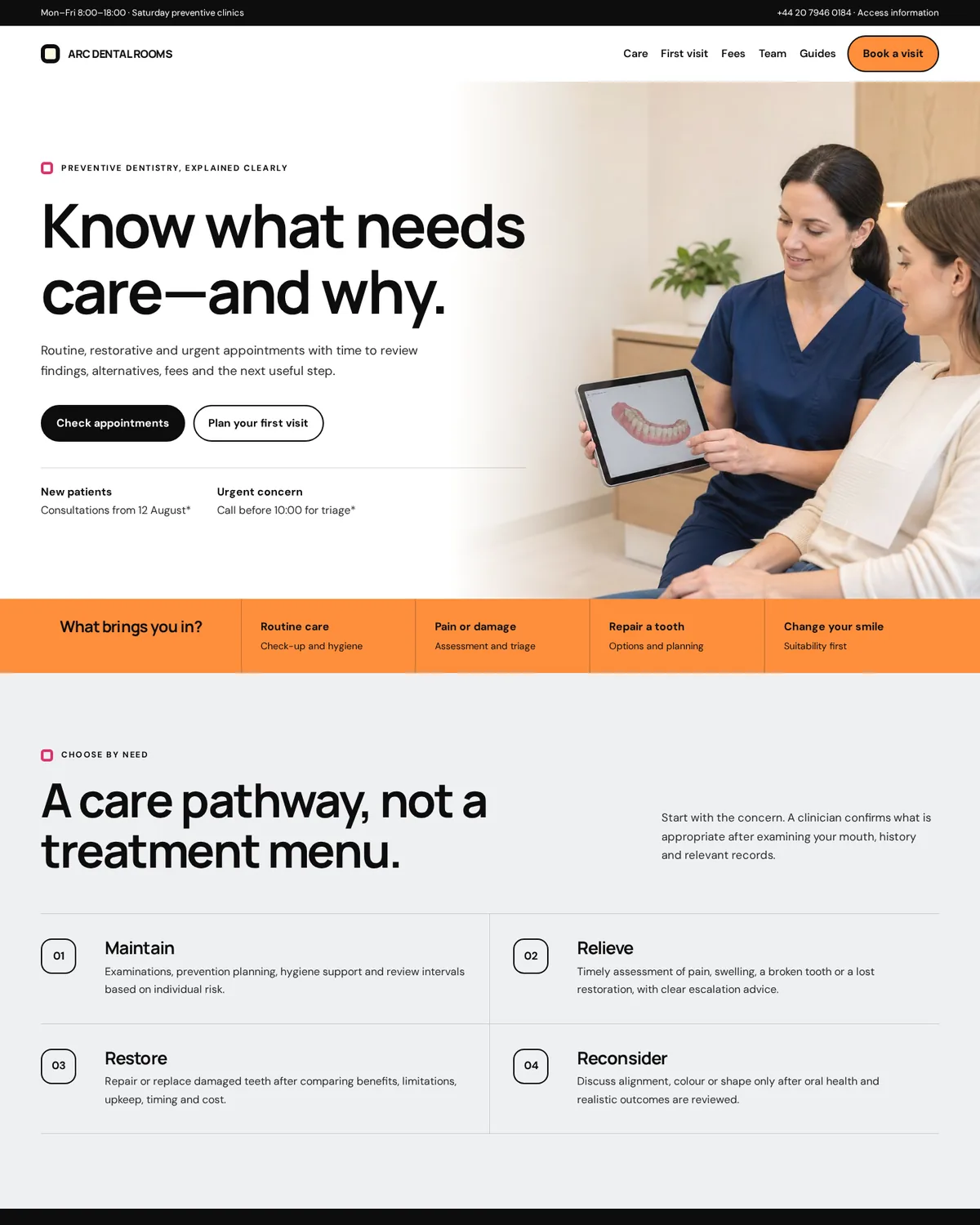
A patient-centered dental practice template with need-based care pathways, first-visit guidance, transparent fees, prevention, and accessible booking
Arc uses Happy Hues Palette 3 with a simple rotated square-ring mark, clean off-white surfaces, black typography, orange action bands, and restrained pink emphasis. The information architecture begins with appointment intent rather than a generic service catalogue, then moves through need-based pathways, a documented first visit, sample fees, tailored prevention, and practical patient information. Full-width color bands frame centered content, while the square-ring signature repeats in eyebrows, process markers, and the logo.
Choose this template for a general dental practice, preventive dental studio, oral-health clinic, family dentistry service, restorative practice, or multidisciplinary dental team that wants to make the patient journey understandable before an appointment.
Replace the Arc Dental Rooms identity with the practice's approved name and a simple transparent logo. If retaining the square-ring motif, keep its stroke regular and its negative space transparent; prepare an original dark version for light navigation and a white version for the footer. Map the final identity colors to the semantic CSS variables and verify every text, button, focus, error, disabled, and hover combination rather than treating accent colors as automatically accessible. Replace all generated photographs with licensed images of the real premises, team, equipment, and patient experience before representing the site as an operating clinic.
Obtain written consent and appropriate releases, remove names and identifiable records, and never expose screens, charts, radiographs, prescriptions, or other health information. Generated people, rooms, equipment, scans, and treatment scenes must not be used to imply real staff, facilities, technology, accessibility, outcomes, or clinical capability.
Rewrite the hero around the practice's actual patient group, location, hours, registration status, appointment availability, and booking process. The availability statements on this demonstration page are fictional and must connect to maintained scheduling data or be replaced with accurate response expectations. Clearly distinguish online booking, an appointment request, telephone triage, emergency advice, and services the practice cannot provide. Do not promise same-day care, pain relief, suitability, diagnosis, treatment success, permanent results, or guaranteed timing. Urgent-care content should identify red flags, local emergency routes, out-of-hours arrangements, and the limits of website advice, using language reviewed by qualified clinicians.
Every care page should explain who it may suit, the assessment required, realistic alternatives, stages, benefits, common limitations and risks, recovery or aftercare, maintenance, fees, likely additional costs, and when another clinician or specialist may be needed. Avoid before-and-after claims without valid consent, consistent photography, clinical context, and applicable advertising review.
Replace sample fees with current prices, currency, effective date, inclusions, exclusions, deposit rules, cancellation terms, insurance or plan handling, laboratory and imaging charges, specialist fees, prescription costs, and how estimates may change after examination. Do not label a fee fixed if clinical findings can alter scope. Multi-step care should have a written plan that separates confirmed need, optional care, alternatives, sequence, review points, responsibilities, and likely extra costs. Team profiles require verified names, professional titles, qualifications, registrations, permitted scope, languages, interests, and current photographs.
Claims about digital dentistry, gentle care, specialist status, sedation, implants, orthodontics, cosmetic outcomes, materials, safety, infection control, accessibility, sustainability, awards, ratings, or experience need evidence, scope, dates, and any required regulatory wording. Never invent testimonials, registrations, awards, memberships, patient counts, success rates, or review scores.
For SEO, create substantial pages for genuine services, concerns, clinicians, patient guides, fees, accessibility, and location rather than thin pages for every symptom or neighborhood. Use unique titles, descriptions, canonical URLs, logical headings, author or reviewer details, review dates, meaningful internal links, and accurate alternative text. Apply Dentist, MedicalClinic, Physician, Service, FAQPage, or Article structured data only when visible information supports every property. Health content needs named clinical ownership, sources where useful, a review schedule, correction process, and clear boundaries between education and individualized advice.
If multilingual, use qualified health translators and clinical reviewers for symptoms, consent, risks, medication, emergency instructions, prices, privacy, and complaints; do not translate only the navigation.
On mobile, preserve the order from concern to action, keep telephone and booking controls easy to reach, allow fee rows and long labels to wrap, and never hide urgent or accessibility information behind hover. Maintain semantic landmarks, correct heading order, keyboard access, visible focus, large touch targets, high contrast, reduced-motion support, form labels, accessible errors, and alternatives for images and animations.
Forms should collect only information needed for routing and avoid requesting detailed health histories, identity documents, payment data, or clinical photographs through ordinary email. Use secure, access-controlled systems for health information, consent, records, payments, and patient messaging. Explain recipients, retention, lawful basis, response time, and emergency limitations. Analytics, maps, chat, video, reviews, scheduling, advertising, and social embeds should respect consent and healthcare privacy.
Before launch, replace every fictional person, fee, date, address, image, availability statement, treatment detail, and claim; test booking, telephone and email links, triage routes, form validation and failures, keyboard and screen-reader use, zoom, mobile and ultrawide layouts, reduced motion, slow networks, consent, and browser compatibility. Add reviewed privacy, cookies, terms, accessibility, clinical disclaimer, emergency, fees, cancellation, complaints, safeguarding, records, consent, and contact pages, with named clinical, operational, privacy, accessibility, and content owners and scheduled reviews.