Axiom Clinical
A humane clinical research company template with study search, trial phases, and a clear patient eligibility pathway
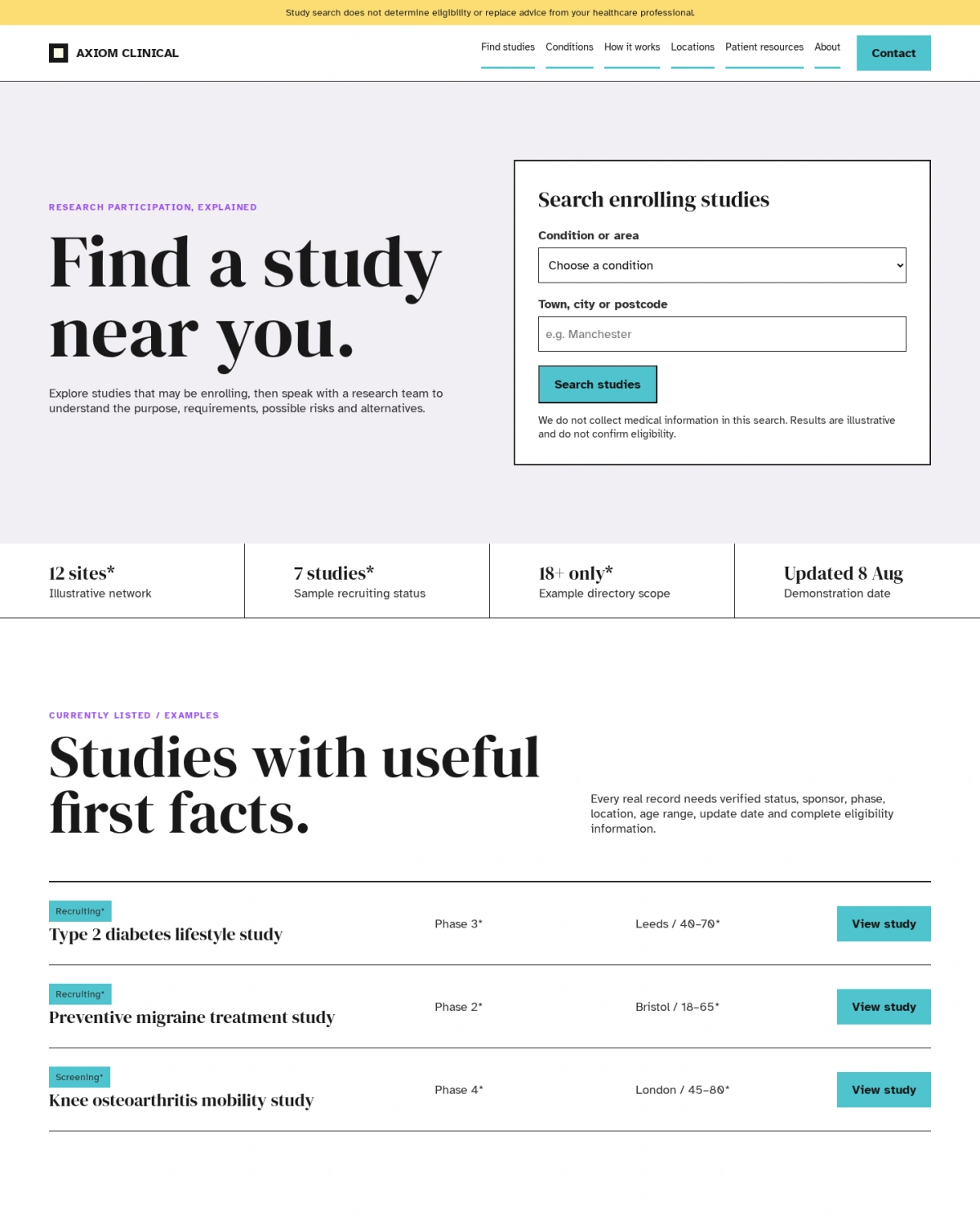
A humane clinical research company template with study search, trial phases, and a clear patient eligibility pathway
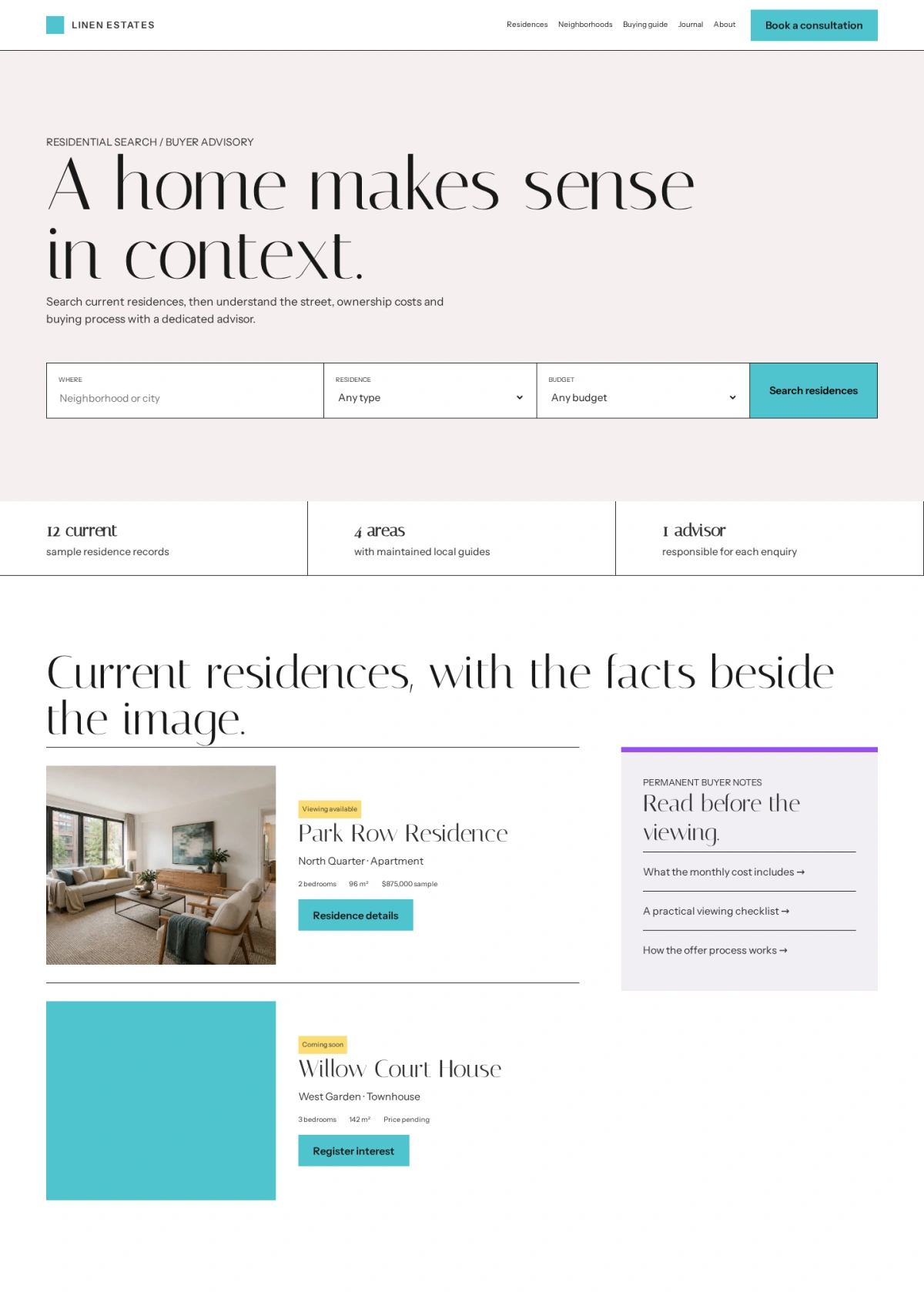
Axiom Clinical makes study discovery the homepage's primary task. A clearly labeled condition-and-location finder leads into status-aware recruiting-study rows, a plain-language Phase 1–4 sequence, a five-step eligibility pathway, bounded consultation photography, accountable site records, and patient FAQs. The square-ring logo becomes the repeated study-status marker. Happy Hues Palette 1 supplies white and lavender clinical surfaces, charcoal text, teal actions and recruiting states, purple educational numbering, and yellow disclosure bands. DM Serif Display and Atkinson Hyperlegible balance humane reassurance with accessible reading without resembling a hospital brochure or abstract technology poster.
Choose this template for a clinical research organization, research-site network, patient recruitment service, medical trial directory, or specialist healthcare organization that needs to help visitors understand and locate appropriate studies.
Replace the AXIOM wordmark with a compact transparent logo and prepare light, dark, and small-format versions. Retain the strong container edges, consistent gutters, semantic section order, and calm spacing scale when changing content; these are essential to the page's reassuring, implementable quality.
Rewrite the hero around a truthful patient need and a specific action. The study finder should use controlled condition and location fields, clear validation, useful empty states, and a privacy explanation before collecting health-related information. Never imply that search results establish eligibility, guarantee enrollment, provide diagnosis, or replace advice from a qualified clinician. Study records should name the sponsor or responsible organization where appropriate and include recruitment status, condition, phase, intervention type, location, age range, major eligibility criteria, contact method, update date, and a link to complete verified information.
Establish a documented editorial process for checking status and promptly removing closed or suspended studies. Explain clinical phases in plain language and distinguish general education from personalized medical guidance. Claims about participant numbers, locations, experience, ethics, diversity, safety, or outcomes must be current, supportable, and scoped to the correct organization. Avoid invented accreditations, endorsements, success rates, testimonials, or treatment promises. Use authentic, licensed photographs that represent the actual audience and care context. Obtain releases for identifiable people, avoid images that reveal real patient information, and never use generated scenes to imply facilities, clinicians, partnerships, or capabilities that do not exist.
Keep headings, eligibility statements, controls, consent language, and actions as editable HTML rather than embedded in photographs. Provide descriptive alternative text and do not identify a person's condition from appearance.
For SEO, create substantive pages for real conditions, study locations, participation guidance, and organizational expertise; give each a unique title, description, canonical URL, logical headings, and helpful internal links. Do not mass-produce thin location or condition pages. Where structured data is used, ensure it matches visible, reviewed content.
If the site is multilingual, localize terminology, consent explanations, contact routes, reading level, dates, and regulatory information rather than translating navigation alone.
On mobile, stack the hero cleanly, preserve search labels, make timeline content readable without horizontal scrolling, and convert dense study rows into accessible summaries. Maintain large touch targets, keyboard focus, sufficient contrast, error announcements, and screen-reader labels.
Forms should collect only necessary information, explain the recipient and response time, use secure transport and storage, and provide appropriate consent and retention notices. Optional analytics, chat, video, advertising, and third-party embeds should remain disabled until valid consent where required.
Before launch, replace every fictional organization name, phone number, location, study, statistic, photograph, and claim; test search, filters, forms, validation, error states, keyboard navigation, responsive layouts, performance, privacy choices, and contact escalation. Add reviewed privacy, terms, accessibility, participant-rights, medical-disclaimer, and data-handling pages. Assign clinical, legal, privacy, and content owners with a review schedule so high-impact information stays accurate after publication for patients, caregivers, clinicians, and research teams.