Everwell Veterinary
A triage-led veterinary company template with species-aware booking, life-stage care, and transparent clinic availability
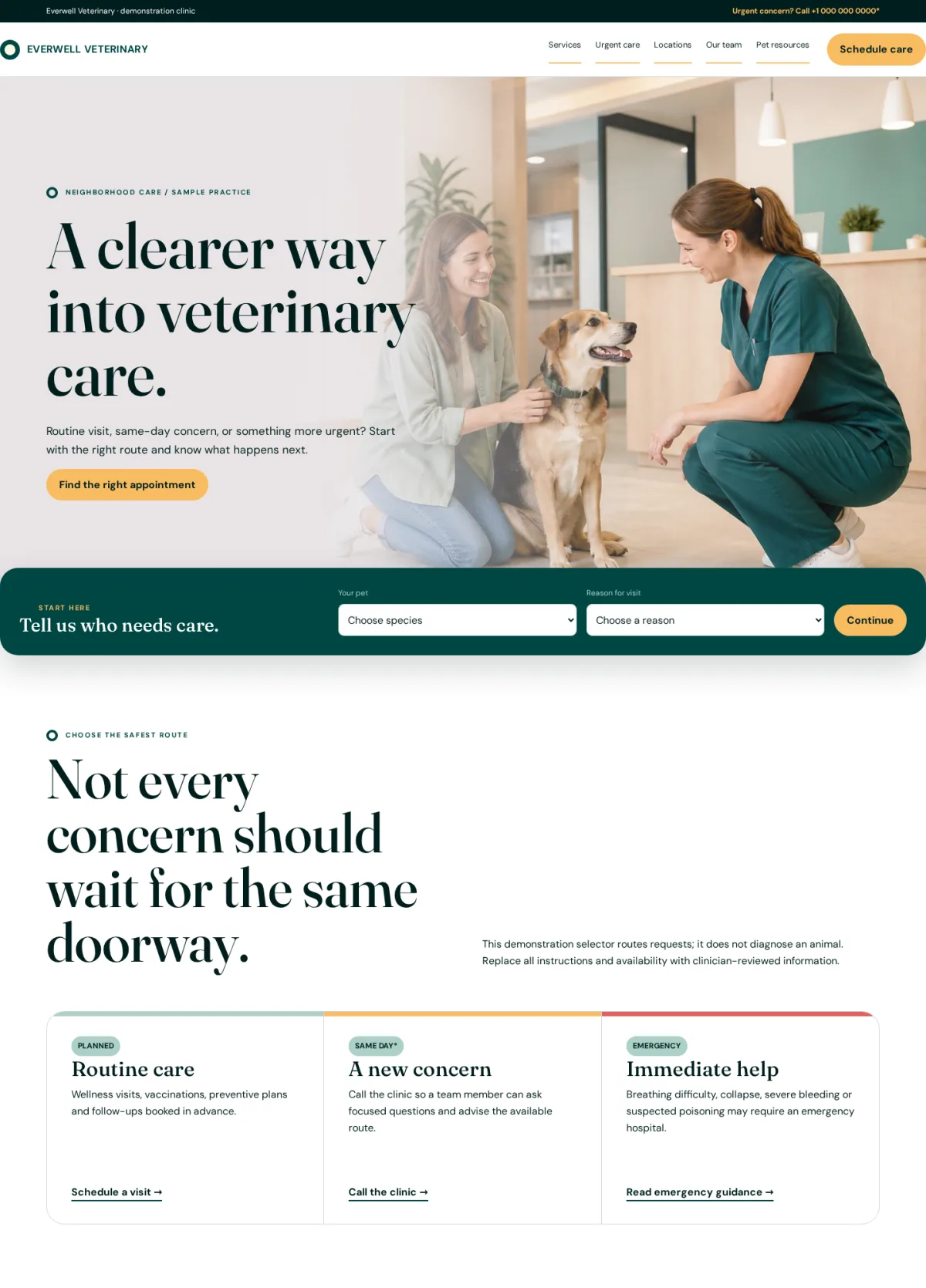
A triage-led veterinary company template with species-aware booking, life-stage care, and transparent clinic availability
Everwell organizes the homepage around the decisions pet owners actually make: a species-and-reason appointment router, routine versus same-day versus emergency pathways, a longitudinal life-stage journey, a numbered service ledger, appointment preparation, maintained clinic availability, and senior-care follow-up. A simple circular mark recurs in section labels while rounded controls, calm photography, strong container edges, and full-width clinical information bands balance neighborhood warmth with accessible healthcare structure.
Choose this template for a veterinary clinic, multi-location animal hospital, mobile veterinary service, preventive-care network, specialty practice, or pet health provider.
Replace the Everwell logo with a transparent brand asset and prepare compact variants for the utility bar, mobile menu, and footer. Preserve the consistent container edges, life-stage matrix, aligned booking controls, clear urgency split, and calm spacing.
Rewrite the hero for the actual species, service area, opening hours, and booking workflow. The initial selector should route visitors rather than diagnose an animal. Clearly distinguish routine appointments, same-day concerns, urgent care, and emergencies, and publish direct instructions for situations the organization cannot handle. Never imply that an online form, chatbot, or symptom list replaces examination by a qualified professional. Service pages should state supported species, scope, preparation, likely process, clinician qualifications, location, pricing approach, and follow-up. Keep medication, vaccination, parasite, nutrition, diagnostic, surgery, dental, and emergency guidance current and reviewed by a named clinical owner.
Avoid universal schedules when recommendations vary by animal, age, health, region, or regulation. Display fees, plans, insurance, deposits, cancellation terms, after-hours charges, and payment methods transparently. Staff biographies, licenses, specialist titles, accreditations, hospital capabilities, operating hours, availability, and outcome claims must be verifiable. Never invent testimonials, awards, emergency capacity, equipment, or response times. Replace all animal and team photographs with licensed, authentic images from the real practice where possible. Obtain staff and client permission, remove identifying information from records and screens, and do not use generated imagery to imply facilities, staff, species expertise, or equipment that do not exist.
Keep service names, warnings, schedules, availability, prices, and booking actions as HTML rather than embedded in images. Alternative text should describe the relevant scene without inferring an animal's diagnosis.
Forms should collect only what is needed to route the request, explain who receives it and expected response timing, and use a secure workflow for medical records, identification, payment details, and sensitive owner information.
For SEO, create substantial pages for actual services, supported species, clinicians, locations, and educational resources. Use unique titles, descriptions, canonical URLs, logical headings, local contact details, review dates, and useful internal links. Avoid thin pages made for every symptom or suburb. Use structured data only when visible organization, location, practitioner, hours, and service details match.
If multilingual, localize veterinary terms, emergency instructions, units, dates, pricing, consent, and contact routes.
On mobile, stack booking fields in order, turn comparison tables into labeled records, keep emergency contacts persistent without obstructing content, and ensure accordions and tabs work with keyboard and touch. Maintain large targets, visible focus, strong contrast, screen-reader labels, reduced motion, and clear error announcements. Optional analytics, maps, chat, scheduling, social, and video integrations should remain disabled until consent where required.
Before launch, replace every fictional location, phone number, clinician, service, availability state, photograph, fee, and claim; test booking, triage routing, forms, validation, emergency escalation, cancellations, keyboard use, screen readers, responsive layouts, performance, consent, and failure modes. Add reviewed privacy, terms, accessibility, medical disclaimer, emergency, records, payment, cancellation, and complaints information. Assign owners and review schedules for services, staff, hours, locations, clinical resources, and urgent-care messaging.