Xenon Lab Supply
A specification-first laboratory supply template with part search, compatibility, stock, documentation, and bulk quotation
A specification-first laboratory supply template with part search, compatibility, stock, documentation, and bulk quotation
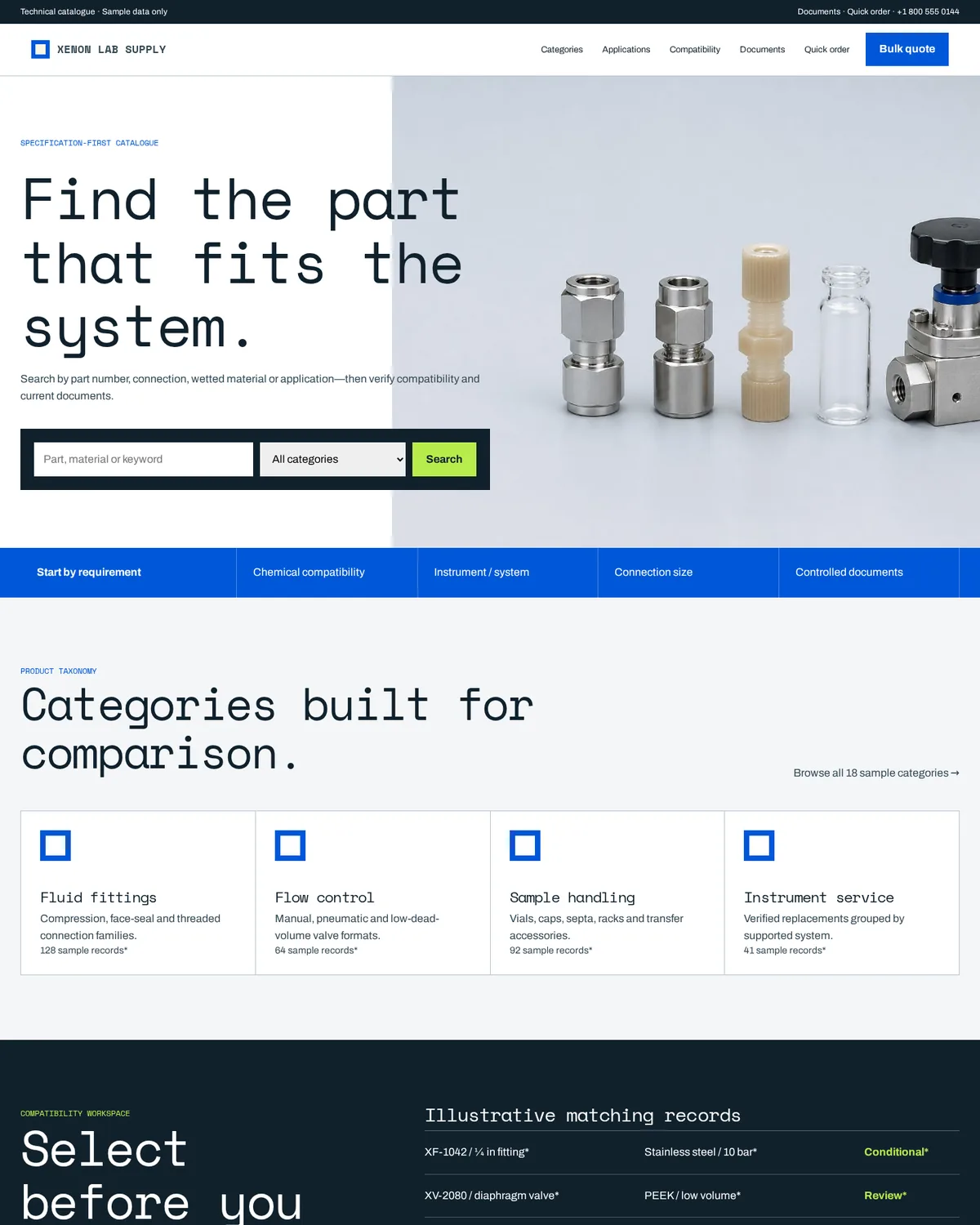
Xenon starts with part-number, category, application, and compatibility search beside a product cutaway and specification preview. Category taxonomy, compatibility, technical data, lead times, application selection, quality workflow, bulk quote, and compliance documents make the page a procurement tool instead of a science poster.
Choose this template for a laboratory component supplier, life-science distributor, instrument-parts company, scientific consumables manufacturer, industrial testing supplier, or technical B2B catalogue.
Replace the Xenon identity with a transparent logo and compact mark for catalogue headers, documents, and mobile navigation. Preserve the aligned specification rows, shared container edges, consistent gutters, stable product-image ratios, and clear distinction between search, compatibility, stock, and documentation. Every product record should include a stable manufacturer and supplier part number, manufacturer, category, application, compatible systems and exact models, material, dimensions and units, tolerance, operating range, chemical or biological compatibility, sterility or cleanliness status, package quantity, unit of measure, country of origin where required, regulatory or quality status, stock, lead time, price context, lot or serial traceability, shelf life, storage, safety documentation, revision date, and support owner.
Compatibility claims must identify tested configurations, firmware or model constraints, required adapters, exclusions, and evidence. Never use vague compatible language for a critical component without verification. Technical values need units, conditions, tolerances, standards, and links to current controlled documents. Stock and lead-time states require timestamps, quantity thresholds, backorder rules, allocation, expiry, and regional context. Compliance documents should include exact product or lot scope, issuer, date, revision, expiry, signature or verification method, file type, size, and archive policy.
Do not label products compliant, certified, sterile, research grade, clinical grade, food safe, validated, or suitable for a regulated use without applicable evidence and wording. Bulk-quote forms should clarify quantity, unit, needed date, shipping destination, project reference, substitution policy, taxes, freight, validity, and response time. Never invent components, specifications, manufacturers, compatibility, stock, prices, certificates, or endorsements.
Replace generated product cutaways and category imagery with accurate licensed photography or engineering renders of actual items before launch. Preserve geometry and scale; generated images must not represent a purchasable component. Keep part numbers, dimensions, statuses, documents, controls, and warnings in HTML. Alternative text should identify the product, view, connection, material, and relevant feature. Forms and accounts should collect minimal information and use secure systems for purchase orders, contracts, tax records, regulated-use details, payments, and confidential projects.
For SEO, create substantial pages for real parts, categories, applications, manufacturers, systems, guides, and documents. Use unique titles, descriptions, canonical URLs, logical headings, breadcrumbs, identifiers, update dates, and internal links. Apply Product, Offer, Organization, or TechArticle structured data only when visible facts match. Prevent filtered and account-only catalogue states from creating thin pages.
If multilingual, localize units, technical terms, documents, safety information, currencies, taxes, and delivery.
On mobile, collapse filters accessibly, stack technical tables into labeled records, preserve product geometry, and avoid overflow. Maintain keyboard access, visible focus, strong contrast, large targets, reduced motion, screen-reader labels, and non-color stock states. Optional analytics, chat, document viewers, payments, and support integrations should respect consent and commercial privacy.
Before launch, replace all fictional products, data, images, documents, prices, stock, contacts, and claims; test search, compatibility, quick order, quote, documents, accounts, forms, keyboard use, screen readers, responsive layouts, performance, consent, and failures. Add reviewed privacy, terms, accessibility, quality, regulatory, product-use, warranty, shipping, returns, document-control, security, and contact pages, with product, quality, regulatory, engineering, legal, and content owners and formal review schedules.