Yield Restaurant Group
A multi-venue restaurant group template with live reservation, venue comparison, seasonal menu story, private dining, and events
A multi-venue restaurant group template with live reservation, venue comparison, seasonal menu story, private dining, and events
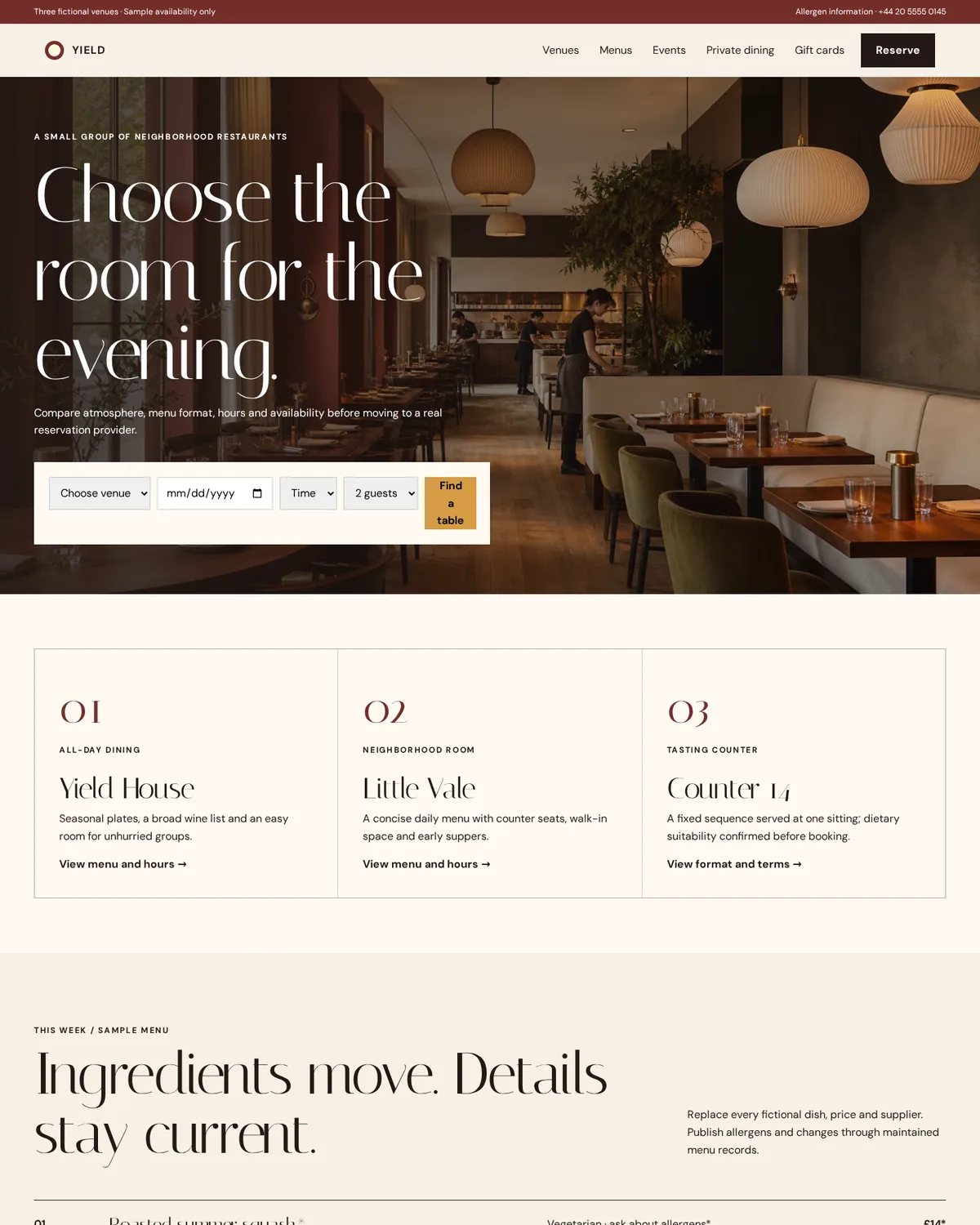
Yield makes the reservation decision immediate through venue, date, time, party size, and live availability. Venue comparison, a seasonal menu narrative, sourcing, service formats, private dining stages, events, locations, gift cards, and newsletter follow in distinct aligned bands rather than a food collage.
Choose this template for a restaurant group, chef-led venue collection, hospitality company, dining destination, food hall operator, or events-focused culinary business.
Replace the Yield identity with a transparent logo and prepare compact venue marks for the switcher, mobile navigation, gift cards, and footer. Preserve the shared container edges, aligned reservation fields, consistent image ratios, measured gutters, and alternating editorial bands. Reservation controls must connect to current inventory and clearly state venue, local date and time, party size, seating options, accessibility needs, confirmation, deposits, cancellation, late arrival, no-show, and contact procedures. Never display invented live availability. Each venue page should include address, map alternative, hours, kitchen and bar times, reservation policy, walk-in policy, contact, accessibility, transport, parking, dress guidance if relevant, age restrictions, service charge, and temporary closures.
Menus need names, descriptions, current prices and currency, portion or format, dietary and allergen information, update dates, and notice that availability can change. Do not claim allergen-free environments without validated controls; direct guests with allergies to trained staff. Sourcing ledgers should name partners only with permission and accurately describe products, seasons, standards, and relationship. Claims about local, organic, sustainable, humane, wild, day-boat, zero waste, awards, chef credentials, or nutrition require evidence and scope. Private dining pages should state capacities, room configurations, minimum spend, deposits, menus, service, equipment, accessibility, cancellation, taxes, fees, and inquiry timing.
Event records need venue, date, timezone, availability, price, age or dietary context, refund terms, and ticket provider. Never invent reviews, awards, suppliers, chefs, events, availability, or prices. Replace all generated interiors, dishes, chefs, guests, and maps with authentic licensed photography before launch. Maintain natural food appearance and accurate venue context; generated dishes must not represent items sold. Keep menus, prices, availability, events, hours, policies, and actions in HTML. Alternative text should describe dishes and interiors without subjective claims.
Forms should collect minimal information and use secure systems for reservations, event contracts, guest notes, dietary needs, deposits, payments, and private contact details.
For SEO, create substantial pages for real venues, menus, chefs, events, private dining, neighborhoods, sourcing, and stories. Use unique titles, descriptions, canonical URLs, logical headings, local details, update dates, and internal links. Apply Restaurant, Menu, FoodEvent, Offer, or FAQ structured data only when visible facts match. Avoid thin location keyword pages and obsolete menu URLs.
If multilingual, localize menu terminology, allergens, currencies, taxes, reservations, accessibility, policies, and contacts.
On mobile, stack reservation fields in order, make venue switching clear, convert hours tables to labeled records, preserve image crops, and avoid overflow. Maintain keyboard access, visible focus, strong contrast, large targets, reduced motion, screen-reader labels, and accessible errors. Optional analytics, maps, reservation providers, payments, video, and social embeds should respect consent.
Before launch, replace all fictional venues, menus, chefs, suppliers, events, prices, hours, images, and claims; test reservation, venue switching, menus, events, private dining, gift cards, forms, payments, keyboard use, screen readers, responsive layouts, performance, consent, and failures. Add reviewed privacy, terms, accessibility, reservations, cancellations, allergens, service charges, gift cards, events, photography, and contact pages, with venue, culinary, operations, legal, and content owners and daily or seasonal review schedules.