Fjord Marine Systems
A specification-led marine engineering company template with an annotated vessel system, performance tables, and integration workflow
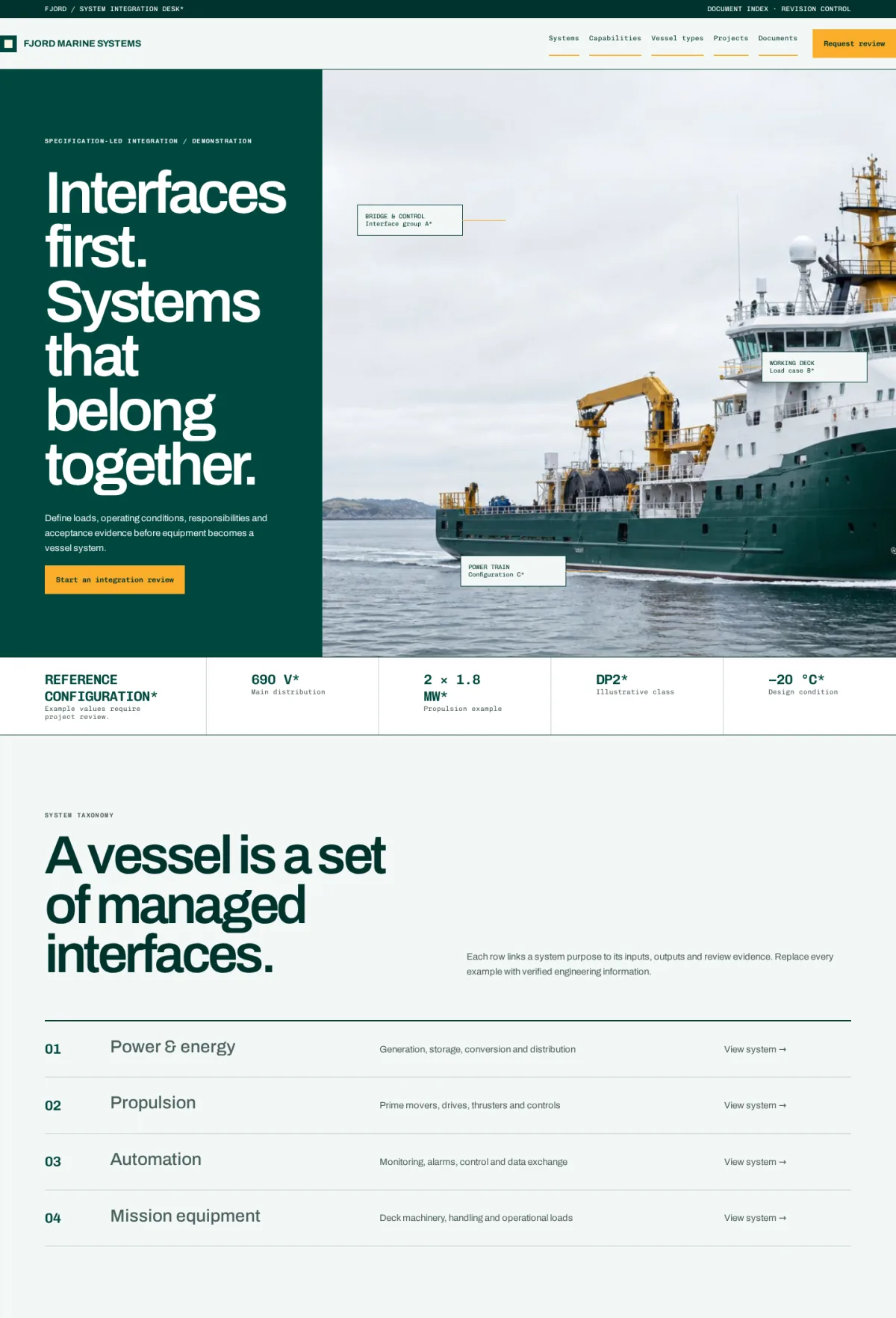
A specification-led marine engineering company template with an annotated vessel system, performance tables, and integration workflow
Fjord Marine Systems leads with an asymmetrical annotated vessel hero and a reference-configuration ledger rather than a conventional photographic banner. An HTML system taxonomy, condition-aware specification table, full-width machinery study, capability register, four-gate integration workflow, engineering review handoff, and controlled document register turn complex marine engineering services into an orderly and reusable information architecture.
Choose this template for a marine systems integrator, naval engineering consultancy, equipment manufacturer, shipyard supplier, offshore technology company, or industrial service organization.
Replace the Fjord identity with a transparent logo and prepare compact monochrome variants for technical documents and mobile navigation. Preserve the precise shared container edges, table alignment, annotation spacing, restrained signal color, and consistent vertical rhythm. The annotated hero should describe a real system architecture, not act as decorative blueprint art. Rebuild diagrams from verified engineering information in accessible SVG or HTML where practical, and provide a text equivalent. Keep callouts, specifications, buttons, headings, and data separate from photography. System pages should state scope, interfaces, supported vessel classes, operating environment, ratings, standards, options, exclusions, documentation, commissioning, training, spares, warranty, and lifecycle support.
Use consistent units and define conditions behind performance figures. Tables must distinguish typical ranges, engineered limits, example configurations, and guaranteed contractual values. Compatibility matrices should be reviewed by engineering and should never imply certification or suitability without project assessment. Describe the integration process with actual responsibilities, inputs, review gates, factory and harbor testing, acceptance criteria, documentation, and change control. Certifications, class approvals, quality standards, cybersecurity claims, environmental performance, customer names, project counts, geographic coverage, and response commitments must apply to the named entity and current scope.
Never invent vessel projects, test results, facilities, partner marks, or compliance badges.
Replace generated vessel and workshop images with licensed, accurate assets before deployment. Do not show confidential customer designs, names, screens, serial numbers, drawings, or restricted facilities without permission. Generated imagery must not be presented as evidence of equipment, production capacity, safety performance, or delivered work. Give technical images descriptive alternative text, captions, dates, and configuration context. Downloadable documents need version numbers, publication dates, owners, file types, sizes, and archive rules.
Forms should request only the information needed for an initial engineering review, explain response timing, and move drawings, specifications, export-controlled material, and confidential files into an authenticated secure exchange.
For SEO, create substantive pages for real systems, vessel classes, capabilities, lifecycle services, projects, and technical resources. Use unique titles, descriptions, canonical URLs, logical headings, breadcrumbs, and internal links. Avoid thin pages for every specification combination. Apply organization, product, or service structured data only when visible claims match.
If multilingual, localize units, terminology, document versions, support expectations, regulatory references, and contacts through qualified technical review.
On mobile, stack annotation groups, convert wide ledgers into labeled records, preserve readable diagrams, and avoid horizontal overflow. Maintain keyboard access, visible focus, strong contrast, large touch targets, reduced motion, table headings, and non-color status cues. Optional analytics, maps, chat, video, and third-party documents should respect consent and security requirements.
Before launch, replace all fictional specifications, projects, certifications, contacts, photographs, documents, and claims; test navigation, document downloads, forms, validation, secure handoff, keyboard use, screen readers, responsive tables, performance, privacy, and failure states. Add reviewed privacy, terms, accessibility, warranty, support, export-control, quality, security, and contact information. Assign engineering and content owners with version and review schedules so technical information remains dependable.