Harbor One
A luminous clean-energy technology brand template centered on one distinctive consumer product
A luminous clean-energy technology brand template centered on one distinctive consumer product
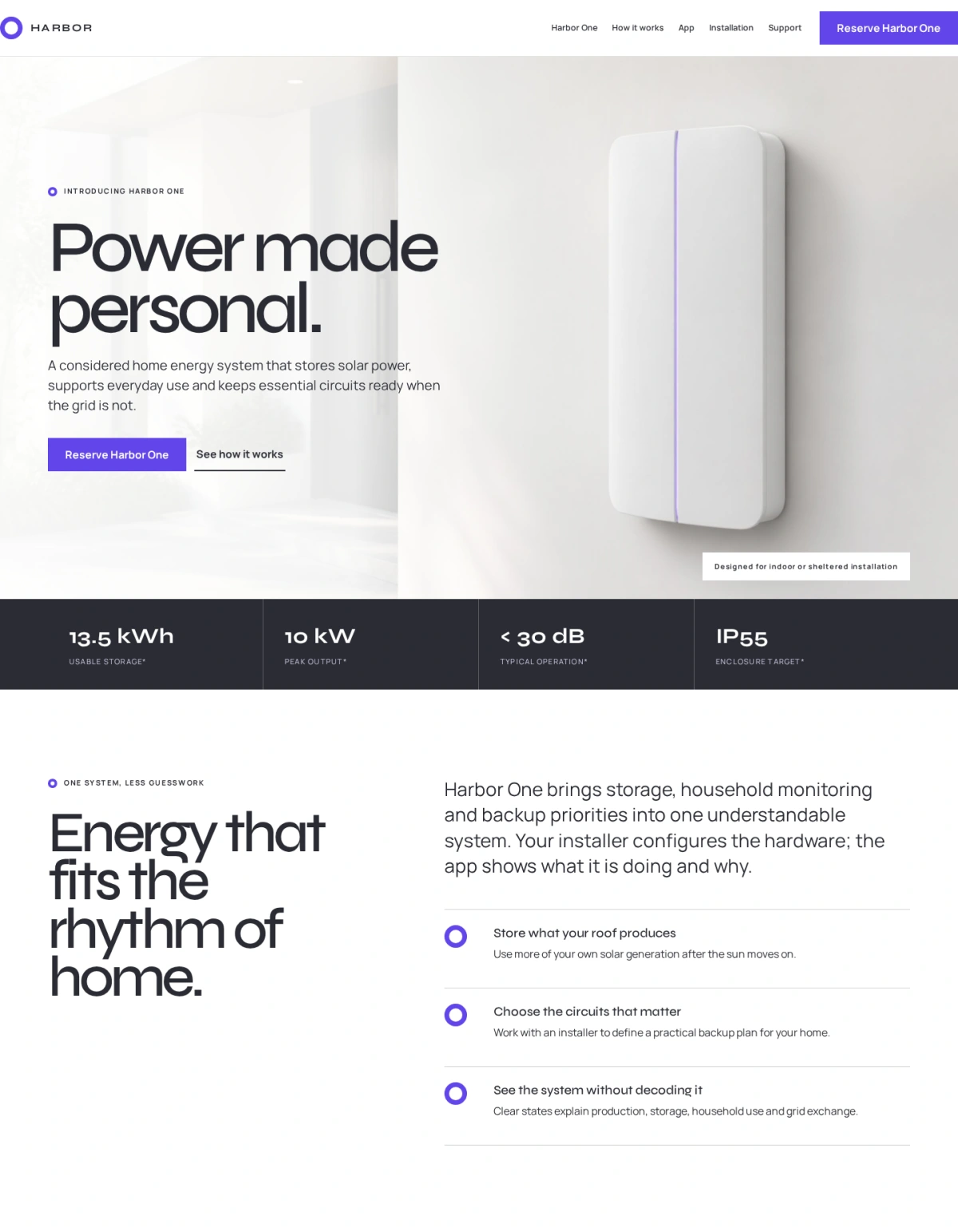
Harbor treats a home energy system as a desirable part of modern living rather than anonymous utility equipment. Sculptural product photography, a factual specification band, a fully readable energy-flow board, an installation scene, and an HTML app-status panel move the story from emotional appeal to practical understanding and reservation intent. The color system uses only Happy Hues Palette 6: paper white and charcoal establish the product environment, violet carries actions and energy paths, pale lavender separates explanatory content, and red is reserved for secondary flow states. A single unadorned circular ring forms the logo and repeated system node, with no detached dot or secondary mark.
Select this template for a design-led technology brand with one flagship product or a tightly related product family. It is well suited to residential energy systems, smart-home hardware, climate technology, connected appliances, charging products, wellness devices, and premium consumer electronics. The page is intentionally product-led: visitors first encounter an ownable object and a clear promise, then learn how it fits into daily life, how it works, and what action to take. It is less suitable for a broad distributor catalog or a company whose main offer is professional consulting.
Replace the HARBOR wordmark with a compact transparent logo, preferably an SVG with a dark neutral version. Keep the navigation visually light so it does not compete with the product. The hero requires excellent product imagery. Use a consistent three-dimensional model or a controlled photography set so shape, ports, indicator lights, proportions, and finishes do not change from section to section. Prepare transparent cutouts, environmental installations, close material details, and scale references. If the product does not yet exist physically, clearly distinguish conceptual renders from production units and avoid implying certifications or capabilities that have not been verified.
Rewrite the main promise around the customer's outcome rather than the internal technology. A short phrase such as Power made personal works because supporting copy immediately explains storage and intelligent management. Follow that pattern: an emotional headline, a factual explanation, and one clear next step. The lifestyle section should show the product in a realistic installation context. Account for required clearances, wiring, mounting, weather protection, and regional building practices. Decorative placement that would be technically impossible can undermine trust. Use the energy-flow section to explain inputs, storage, household use, backup behavior, and app control.
Replace sample values with accurate ranges and state the conditions behind performance claims. Interactive diagrams should remain understandable when motion is disabled and should include accessible text equivalents. Product variants can communicate finishes, capacities, or packages, but use consistent camera angles and lighting so visitors can compare them. Create dedicated pages for specifications, compatibility, installation, warranty, safety, incentives, and support. Place essential specifications in HTML rather than only in downloadable PDFs. The primary conversion may be Reserve, Find an Installer, Get a Quote, or Join the Waitlist depending on commercial readiness.
Explain deposits, cancellation, availability, supported regions, and expected follow-up before collecting payment or personal information.
For SEO, build pages around real customer questions such as backup duration, solar compatibility, installation requirements, energy savings, and regional incentives. Use Product structured data only when price and availability shown to search engines match the visible page. Provide unique titles, canonical URLs, social images, and descriptive alternative text. Because the design relies on large imagery, export responsive WebP or AVIF assets and define dimensions to prevent layout movement.
On mobile, preserve the relationship between product image, headline, and action without reducing controls below comfortable touch size. Add privacy choices before analytics, especially if reservation behavior is used for advertising.
Before launch, verify every numerical claim with engineering and legal teams, test reservation and support flows, replace fictional impact numbers, and confirm that product photographs, icons, and fonts are licensed. When populated with a coherent visual system and transparent product information, this template can help an emerging technology feel mature, desirable, and ready for global customers.