HOUSE LIGHTS THEATRE
A producing theatre template combining current productions, a readable performance calendar, access formats, visit planning, participation, and support
A producing theatre template combining current productions, a readable performance calendar, access formats, visit planning, participation, and support
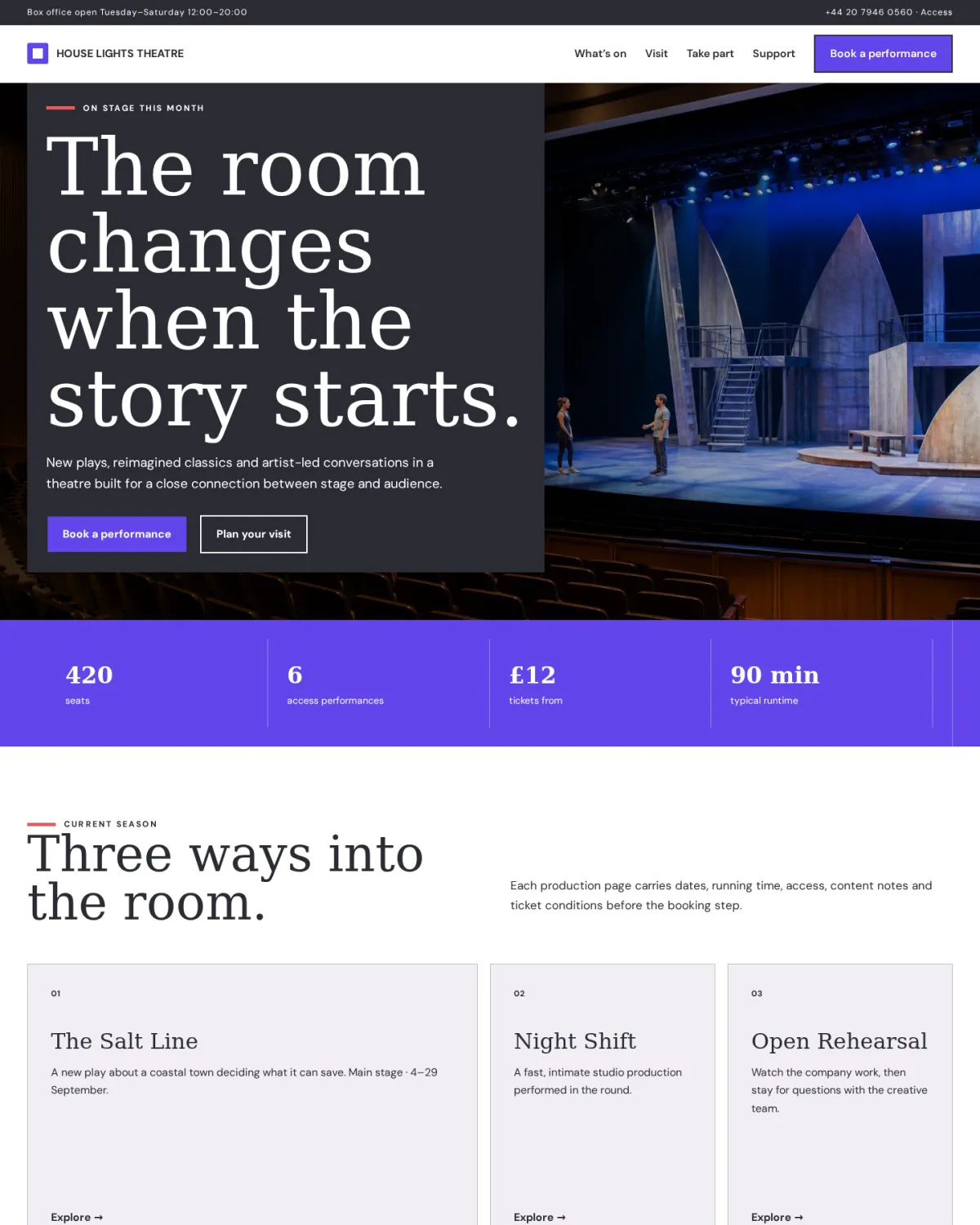
House Lights uses white, pale lavender, charcoal, violet, and coral from a Happy Hues palette. A real stage image anchors the hero while a deliberate content panel protects readability. The season section breaks asymmetrically to give the lead production more weight, followed by a date-led programme ledger. Full-width stage and programme backgrounds contain centered copy, keeping the experience controlled on ultrawide screens.
Choose this template for a producing theatre, playhouse, performing-arts center, touring venue, studio theatre, community stage, or live-performance organization with a maintained events programme.
Replace the House Lights identity with the venue’s approved name and simple transparent logo, plus a light version for dark stage and footer areas. Retain the selected Happy Hues palette or map approved identity colors to semantic variables, then test contrast for text, links, booking actions, event states, notices, focus, errors, disabled controls, and hover behavior.
Replace the generated rehearsal image with licensed photography of the actual auditorium, stage, productions, artists, access route and visitor experience. Secure rights from the photographer, producer, designers, performers and represented artists; credit work as contracted. Never use generated people, sets or venues to imply a real production, cast, building, access provision, award, funder or partnership.
Rewrite the hero around the actual artistic purpose, location, season and immediate booking proposition. Every demonstration production, date, time, runtime, price, seat count, access format and availability statement is fictional and must connect to maintained event and ticketing data or be replaced. Production pages should show approved title, writer, director, company, cast and creative credits, dates, times, venue, runtime, interval, age guidance, content notes, access performances, ticket bands, fees, concessions, booking status, latecomer policy and change or cancellation terms. Do not publish rehearsal images, scripts, recordings, biographies, reviews or artwork without rights and approval.
Clearly mark previews, press nights, post-show events, relaxed performances, captioning, British Sign Language interpretation, audio description, touch tours and other formats only when confirmed. Access pages should document step-free routes, wheelchair spaces and transfer policy, companion tickets, hearing enhancement, captions, interpretation, audio description, relaxed environment, toilets, seating dimensions, lighting, sound, quiet space, travel, parking and how to request adjustments. Use specific information reviewed with people who have relevant access needs; do not rely on a generic accessibility icon.
Visit information needs doors and box-office times, entrance, bag policy, security, food and drink, cloakroom, photography, phones, children, late seating, re-entry, transport disruption and emergency arrangements. Participation pages must state who a workshop is for, age, prerequisites, access, safeguarding, practitioner credentials, capacity, cost, materials, photography, consent, cancellations and expected outcomes. Donation and membership pages should explain legal entity, charitable status where applicable, use of funds, benefits, tax treatment, recurring terms, cancellation, privacy and whether benefits affect gift-aid eligibility.
Venue-hire pages need real capacities, technical specifications, staffing, licensing, insurance, access, setup, overtime, noise, cancellation and prohibited uses. Never invent critic quotations, star ratings, awards, funders, sponsors, cast members, sold-out claims, audience numbers or community impact.
For SEO, create substantial pages for actual productions, performances, artists, seasons, access, venue information, participation and archive. Use unique titles and descriptions, canonical URLs, accurate event status, clear headings, meaningful internal links, structured credits and descriptive image alternatives. Apply TheaterGroup, PerformingArtsTheater, TheaterEvent, Event, Offer, Person or Article structured data only when visible content supports every property; promptly update postponed, cancelled and expired events.
If multilingual, use qualified translators for production context, access, content warnings, ticket conditions, safeguarding and legal text.
On mobile, keep date, time, venue, runtime, access format, availability and booking action together. Do not hide essential booking or safety facts behind hover. Maintain semantic landmarks, heading order, keyboard access, visible focus, large touch targets, zoom, high contrast, reduced motion, accessible dialogs, form labels and errors. Use secure ticketing and explain payment, confirmation, account, privacy, cookies, analytics and marketing consent.
Before launch, replace every fictional event, person, date, price, claim, contact, link and photo; test booking success and failure, sold-out, returns, exchanges, cancellations, access bookings, telephone and email, keyboard and screen readers, mobile and ultrawide layouts, slow networks, reduced motion, time zones and browsers. Add reviewed privacy, cookies, ticket terms, refunds, venue rules, access, safeguarding, complaints, filming, licensing, donations and contact pages with named programme, box-office, access, safeguarding, privacy and content owners.