Kite Audio Works
A product-engineering audio brand template with exploded anatomy, listening-use selection, and model comparison
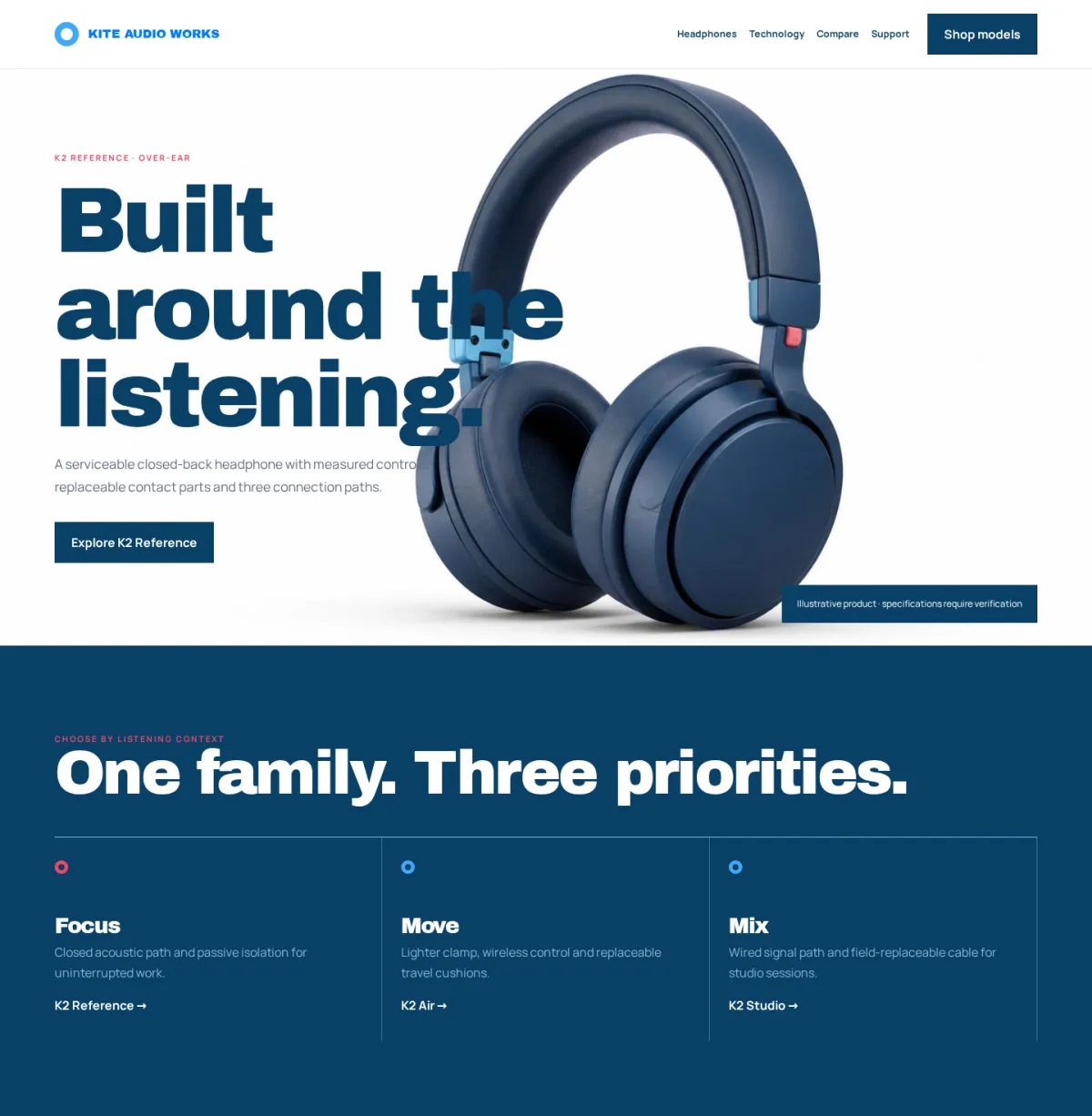
A product-engineering audio brand template with exploded anatomy, listening-use selection, and model comparison
Kite Audio Works centers an exploded headphone assembly and use-case selector, then moves into a specification-led comparison, acoustic anatomy, bounded lifestyle proof, connectivity, materials, and accessories. The design makes complex product distinctions editable and comparable instead of relying on floating-device advertising art.
Choose this template for a headphone maker, audio electronics brand, hi-fi equipment company, consumer technology manufacturer, studio equipment supplier, or product-led hardware startup.
Replace the Kite identity with a transparent logo and prepare compact monochrome variants for small headers, product labels, documentation, and mobile navigation. Preserve the aligned specification columns, shared container edges, deliberate product scale, uniform gutters, and clean contrast. The exploded hero should explain a real product assembly rather than function as decorative concept art. Rebuild callouts from accurate engineering data and keep labels in HTML or accessible SVG. Product records should include stable model names, variants, price, currency, tax context, availability, driver type and size, frequency-response conditions, impedance, sensitivity, weight, fit, materials, battery method, codecs, connectivity, ports, included accessories, compatibility, warranty, and support status.
Define how specifications were measured and do not compare values collected under different conditions without qualification. Use-case selectors should guide discovery rather than claim that one product is objectively best. Comparison tables need consistent units, meaningful differences, accessible headings, and clear handling for unavailable features. Claims about sound quality, high resolution, latency, noise cancellation, battery duration, comfort, durability, sustainability, awards, reviews, or certification must be supportable and appropriately scoped. Press excerpts require permission or compliant short quotation, accurate attribution, date, and source link.
Never invent publications, ratings, prices, test data, customer counts, or endorsements.
Replace generated product images with accurate photography or renders of the actual product before launch. Preserve geometry and scale, show controls and ports clearly, and never use an exploded illustration that misrepresents construction. Lifestyle images need releases and must not imply unsafe listening. Keep model names, prices, technical data, controls, reviews, availability, and actions as editable HTML. Alternative text should identify the model, view, color, and relevant detail without repeating marketing copy.
For SEO, create substantial pages for real models, product families, technologies, comparisons, compatibility, setup, care, firmware, and support. Use unique titles, descriptions, canonical URLs, logical headings, breadcrumbs, internal links, and review dates. Apply Product structured data only when visible price, currency, availability, identifiers, condition, and review data match. Avoid thin pages for every filter combination.
If multilingual, localize units, currencies, taxes, compatibility terms, safety guidance, warranty, and consumer rights.
On mobile, stack model columns into labeled comparisons, preserve image aspect ratios, keep selectors keyboard-operable, and prevent specification overflow. Maintain large touch targets, visible focus, sufficient contrast, reduced motion, screen-reader labels, and non-color feature states. Cart, checkout, inventory, account, firmware, and support controls must connect to real systems. Optional analytics, advertising, chat, social, and video should respect consent.
Before launch, replace all fictional products, images, prices, specifications, awards, reviews, certifications, and claims; test navigation, comparison, variants, search, cart, checkout, forms, downloads, keyboard use, screen readers, responsive layouts, performance, consent, and failures. Add reviewed privacy, terms, accessibility, shipping, returns, warranty, listening-safety, recycling, support, and contact pages, with owners and review schedules for specifications, pricing, inventory, firmware, and compatibility. Test discontinued models, unavailable accessories, failed firmware updates, unsupported source devices, regional warranty differences, damaged returns, and safety notices so every customer has a clear recovery route.