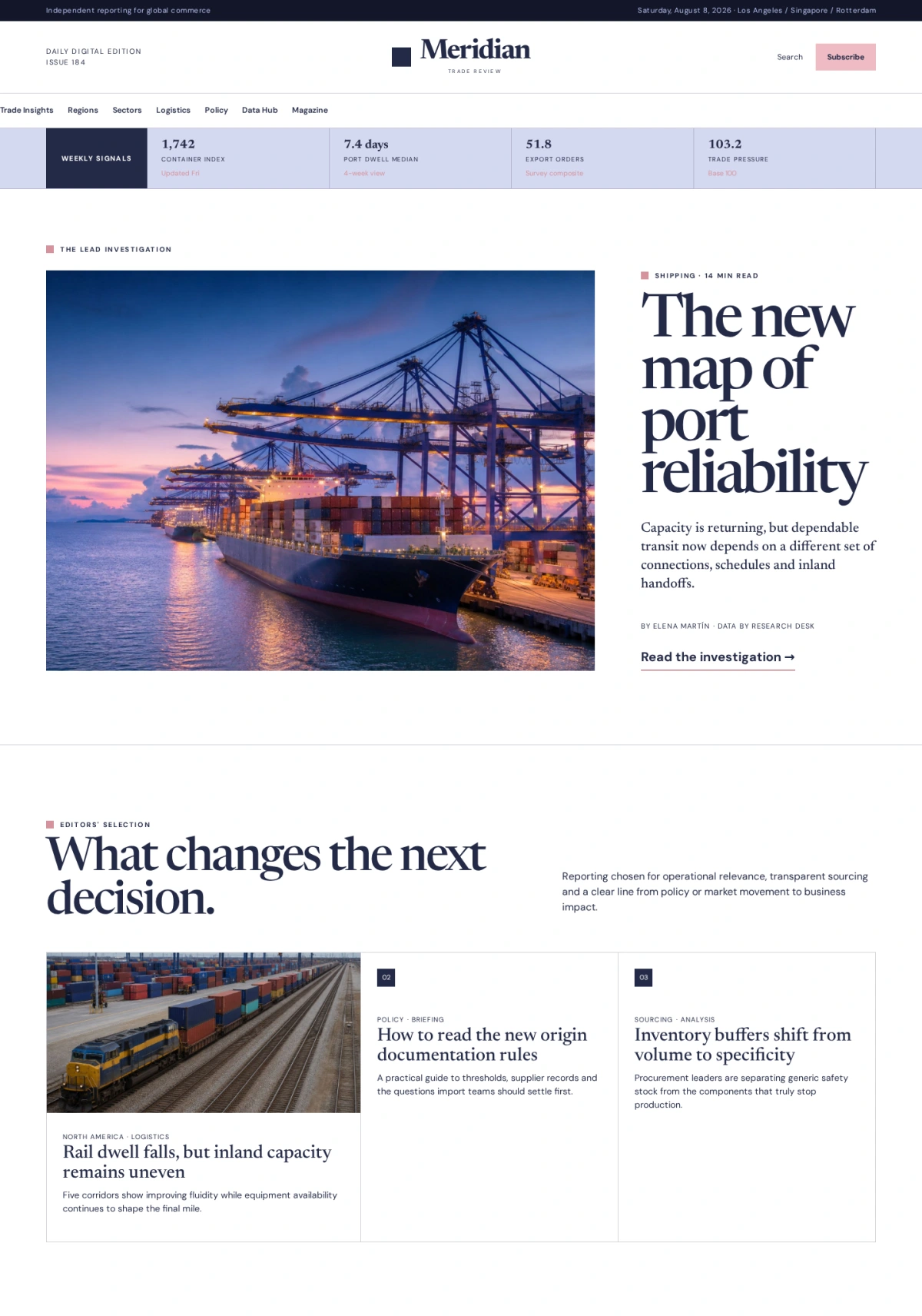
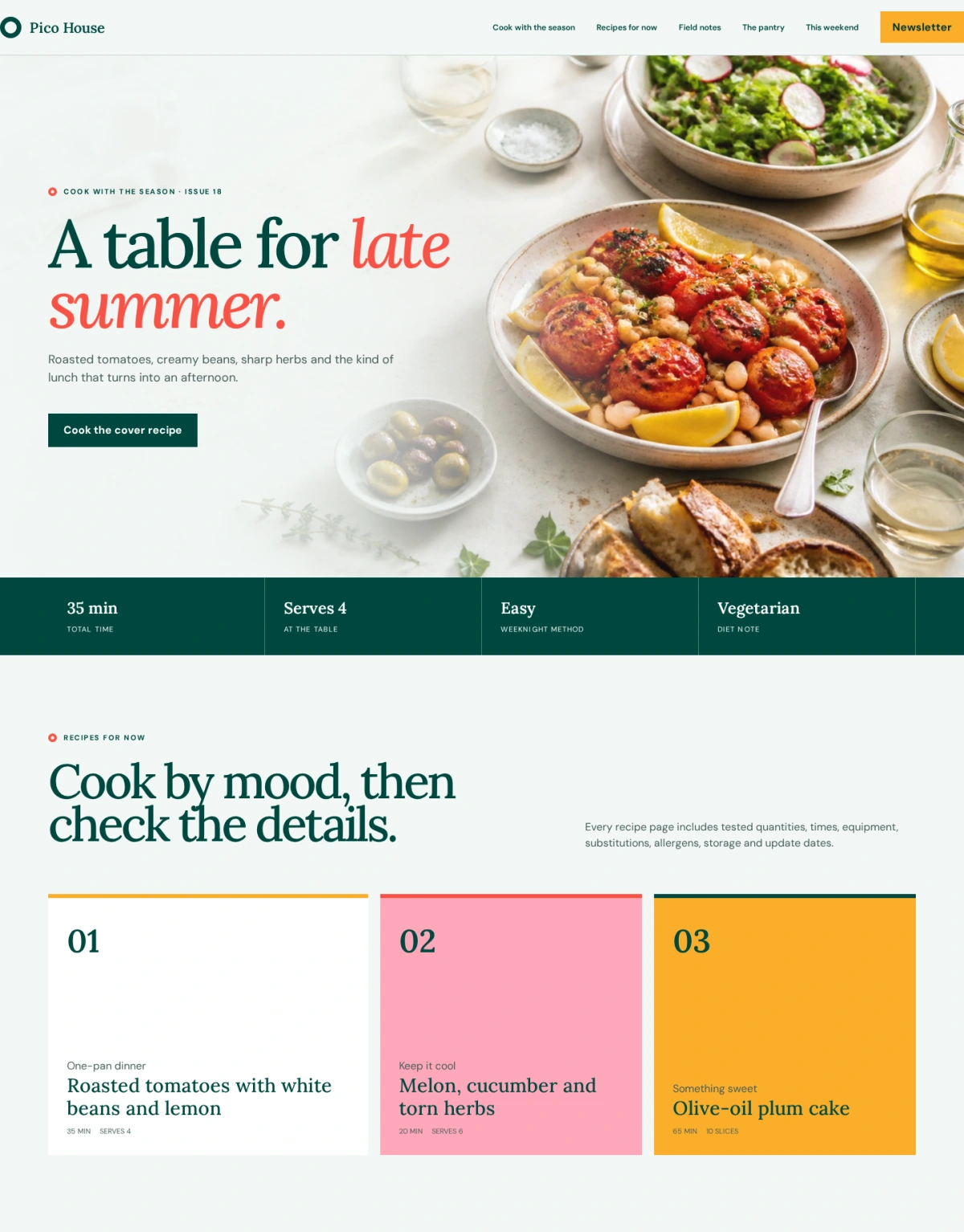
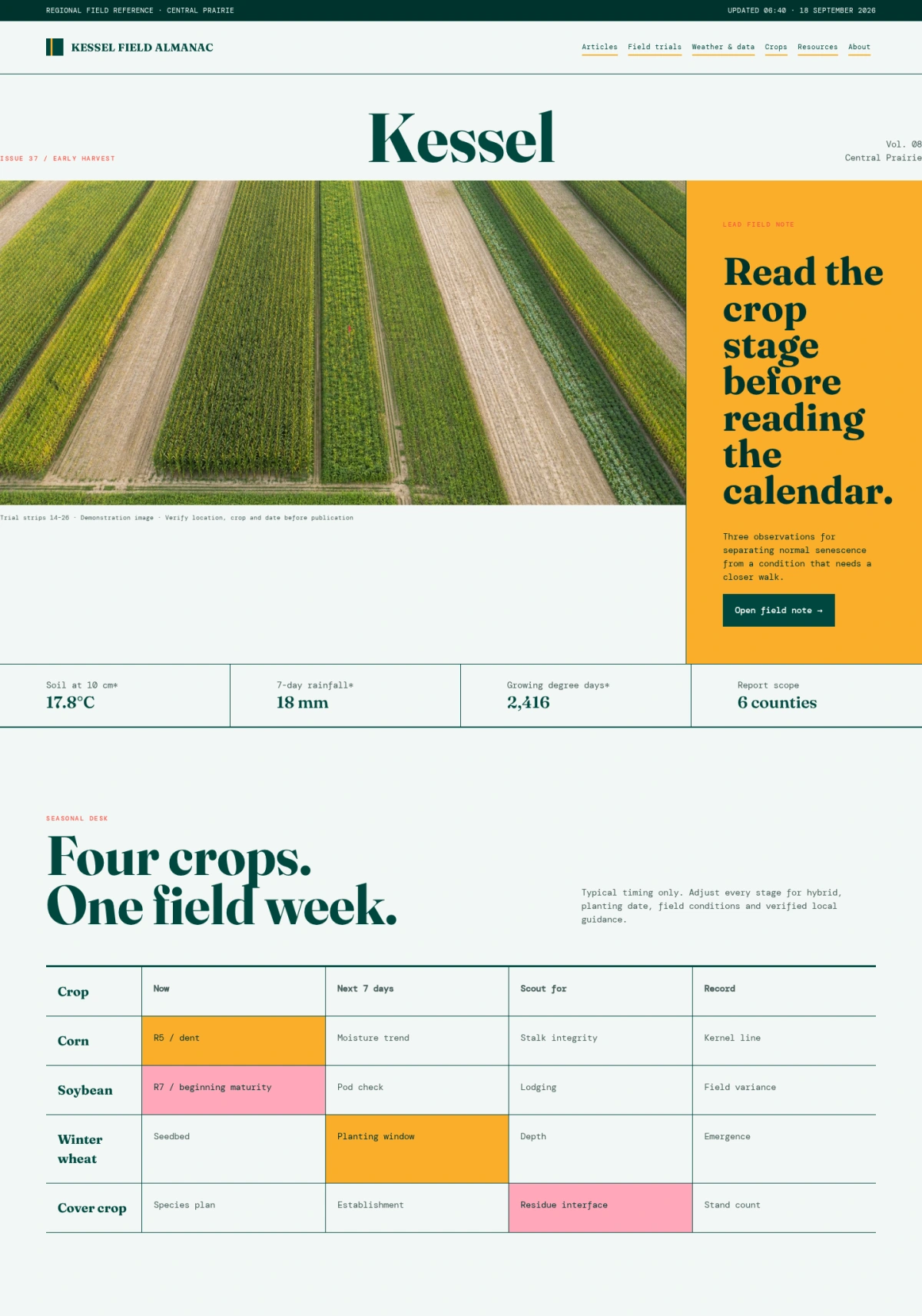
Northline Field Notes
A technical construction publication template for field reports, methods, drawings, safety bulletins, and case studies
A technical construction publication template for field reports, methods, drawings, safety bulletins, and case studies
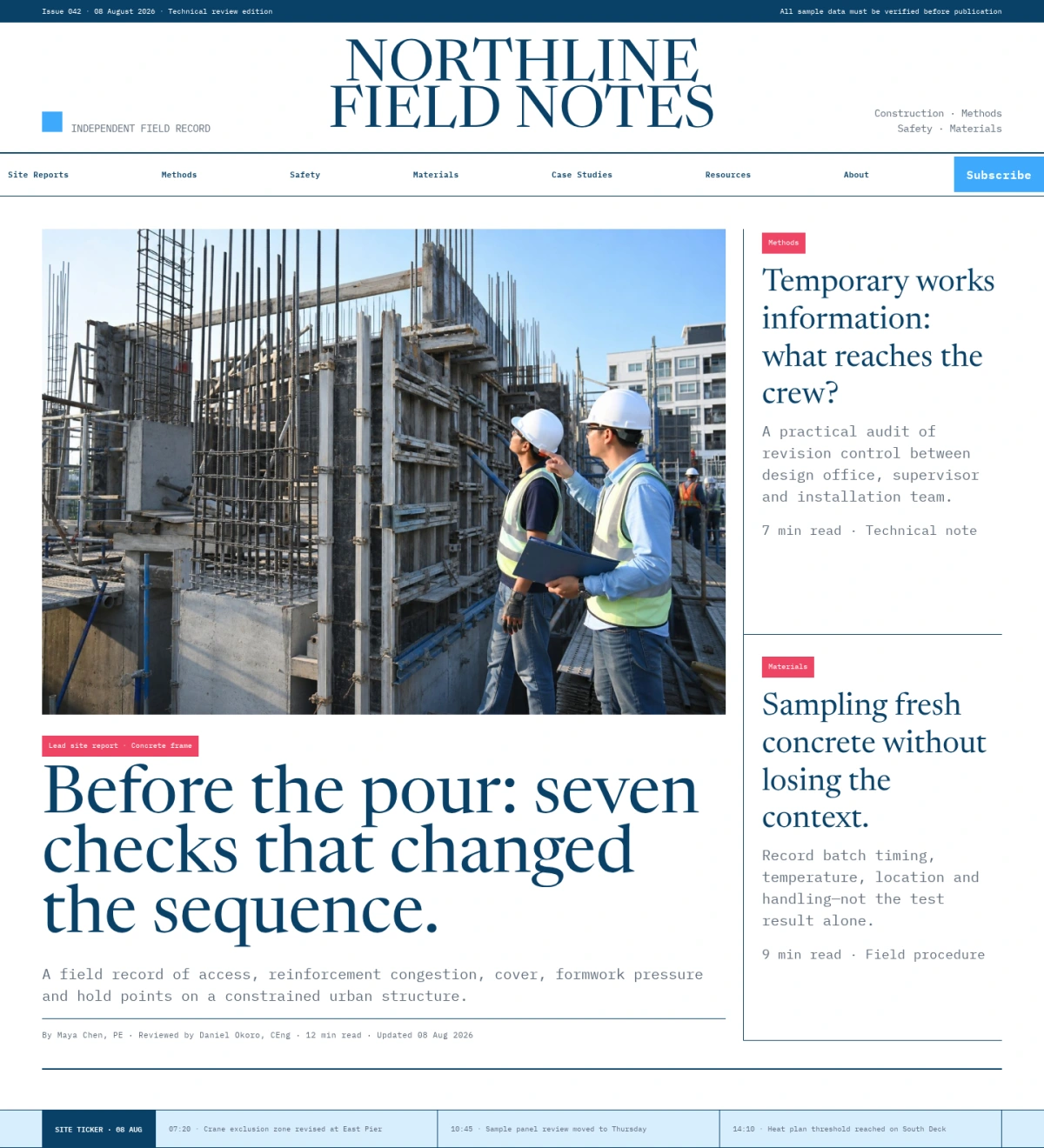
Northline Field Notes adopts the information density of a professional newspaper through a double masthead, issue data, asymmetric lead-story grid, dated site ticker, text-led report index, HTML blueprint notebook, safety bulletin, and evidence-based material-test snapshot. Happy Hues Palette 3 supplies paper white, technical navy, muted report text, blueprint blue surfaces, bright sky-blue controls, and one restrained coral warning accent. A simple sky-blue square functions as the publication mark, while Newsreader and IBM Plex Mono separate editorial hierarchy from field data without borrowing the visual language of a contractor sales site.
Choose this template for a construction publication, civil-engineering knowledge center, contractor resource hub, building-material research team, professional association, or company that earns trust by publishing practical technical expertise. It is an editorial product, not a general contractor brochure.
Replace the NORTHLINE FIELD NOTES masthead with a clear publication name while preserving a compact version for mobile, newsletters, and article social images. The issue, date, weather, and utility information must come from real maintained sources or be removed; never present illustrative values as current operational data. Use the lead grid for one substantial site report and two genuinely different secondary stories. Every article needs a clear audience, reviewed terminology, publication and update dates, author credentials, references, image captions, and a distinction between observation, opinion, and formal guidance.
Construction conditions vary by jurisdiction, contract, climate, material, and project type, so state scope and limitations rather than presenting one method as universally correct. Obtain permission before publishing site locations, worker identities, client information, drawings, security details, or commercially sensitive sequences. Topic navigation should map to a controlled taxonomy such as site reports, methods, safety, materials, case studies, and resources. Avoid overlapping categories that fragment the archive. The weekly site ticker should contain concise, dated updates linked to full context; establish an expiration and correction workflow so old notices do not appear current.
Latest-report rows should use structured fields for headline, category, author, date, reading time, thumbnail, summary, and destination URL. The detail notebook can host drawings, diagrams, checklists, and annotated photographs. Technical drawings should include units, scale when relevant, revision date, authorship, numbered notes, and a disclaimer when conceptual rather than issued for construction. Provide accessible text descriptions and downloadable formats. Methods summaries should identify assumptions, required qualifications, equipment, quality controls, and manufacturer or standard references.
Safety content requires qualified review. Identify jurisdiction, cite applicable regulations, show review dates, and explain that a short bulletin does not replace site-specific planning, training, supervision, hazard assessment, or manufacturer instructions. Urgent notices need an established update and correction process. Case-study snapshots should document context, decision, implementation, measurement period, and verified result. Replace sample leakage, cost, schedule, or performance figures with supportable evidence and explain limitations.
For SEO, create substantial category, method, detail, and case-study pages with unique titles, descriptions, canonical URLs, descriptive alternative text, Article structured data when accurate, and internal links between related reports and safety material. Avoid indexable filter combinations and low-value tag pages. Contributor workflows should define editorial standards, technical review, image rights, conflicts, corrections, and rejection criteria. Newsletter signup should explain frequency and use appropriate consent. Optimize site photography and diagrams into responsive formats with intrinsic dimensions.
On mobile, the masthead, lead grid, report index, diagrams, tables, and safety bulletin must remain readable without shrinking critical labels.
Before launch, replace every fictional project, date, statistic, author, weather value, drawing, and bulletin; verify sources, permissions, regulations, credentials, and sponsor disclosures; test search, subscriptions, downloads, corrections, RSS, accessibility, and privacy controls. With disciplined technical review, this template can become a durable professional reference rather than disposable content marketing.