Pico House
A structured seasonal food publication template for recipes, ingredients, growers, and shared-table stories
A structured seasonal food publication template for recipes, ingredients, growers, and shared-table stories
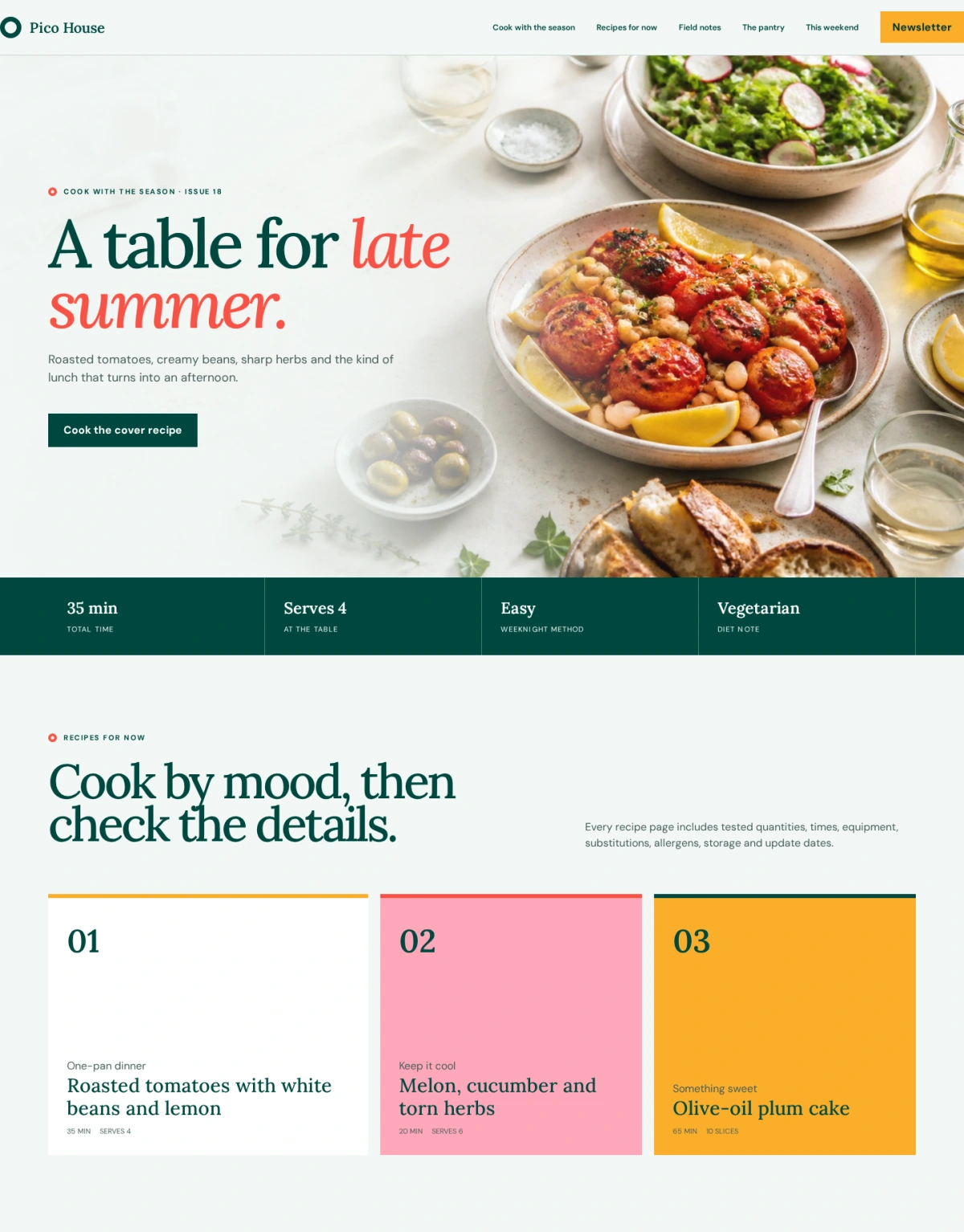
Pico House combines Mediterranean warmth with a practical reusable editorial system. A food-led hero, structured recipe cards, regional ingredient wheel, grower field note, weekend menu, newsletter, and footer are independent HTML components rather than flattened collage graphics. The entire palette comes from Happy Hues Palette 5: cream provides the reading surface, deep green anchors navigation and trust, mustard separates seasonal content, pink supports newsletter and recipe variation, and tomato red identifies timely editorial details. A single deep-green circular ring forms the simplified logo without a detached dot.
Choose this template for an independent recipe publication, food writer, culinary studio, farm-to-table organization, cooking school, specialty food producer, hospitality group, or lifestyle brand that grows through useful and emotionally engaging editorial content. It is designed for teams that want food to feel connected to season, place, people, and everyday rituals rather than presented as an anonymous database of recipes. The handmade visual language is intentionally informal, but the underlying content should still be carefully structured and easy to search.
Replace the PICO HOUSE masthead with a compact transparent logo or a hand-lettered wordmark prepared as an SVG. If using custom lettering, also provide accessible text and a simplified mark for small screens. Establish a controlled visual kit containing two readable typefaces, a small set of illustration marks, paper textures, tape treatments, and five or six food-inspired colors. Consistency is important: uncontrolled scrapbook effects can quickly make the site feel chaotic and reduce legibility. The hero should feature one seasonal story, recipe collection, or editorial theme supported by original food photography.
Use natural light and real preparation details, but avoid styling that makes the dish impossible to reproduce. Every food image should accurately represent the linked recipe. Include a concise introduction and a direct reading action even when the visual composition feels exploratory. Build recipe content from structured fields rather than storing everything as one decorative image. Each recipe should include servings, preparation and cooking time, ingredient quantities, steps, equipment, substitutions, allergen information, storage guidance, author, publication date, and update date where appropriate.
Use metric and imperial units if serving an international audience, and test conversions rather than calculating them visually in the browser. The seasonal ingredient wheel can link to produce guides or monthly collections. Adapt seasons to the audience's actual region; a Northern Hemisphere calendar should not be presented as universal. Explain availability, selection, storage, and practical substitutes. The Recipes for Now section is organized by mood and occasion, which is useful for discovery, but each entry should also carry reliable categories such as meal, dietary need, technique, ingredient, difficulty, and season.
Keep the number of public filters manageable so readers are not faced with dozens of nearly empty archives. Field Notes is suitable for growers, makers, markets, travel observations, and sourcing stories. Obtain permission for portraits and locations, identify sponsored visits, and avoid romantic claims that cannot be supported. The Pantry section can hold foundational techniques, ingredient explainers, preservation guidance, and equipment recommendations. Food safety information should be reviewed carefully, especially for fermentation, canning, raw ingredients, allergens, and storage temperatures.
If affiliate links are used, label them clearly. The weekend menu or editorial plan should connect several recipes into one practical sequence, including make-ahead steps and a consolidated shopping list when possible. Newsletter signup copy should state what readers will receive and how often, use appropriate consent, and provide an easy unsubscribe path.
For SEO, give every recipe and story a unique title, description, canonical URL, descriptive image alternative text, and strong internal links. Use Recipe structured data only when the visible page provides the required accurate information. Avoid publishing generated ratings, preparation times, nutrition values, or author identities. Optimize photography into responsive WebP or AVIF files and provide intrinsic dimensions so the collage does not shift while loading.
On mobile, simplify decorative overlaps, retain comfortable touch targets, and keep ingredient and method text larger than the handwritten accent style.
Before launch, test recipes in a real kitchen, verify dietary labels, replace all sample photography and names, review image licenses, test search and newsletter delivery, and add privacy and terms pages. With dependable recipes beneath its expressive surface, this template can help a small food publisher build a memorable voice, loyal readership, and discoverable library of evergreen culinary content.