RANGE FIELD EQUIPMENT
A technical outdoor equipment template organized by field conditions, compatible systems, fitting, maintenance, and repair
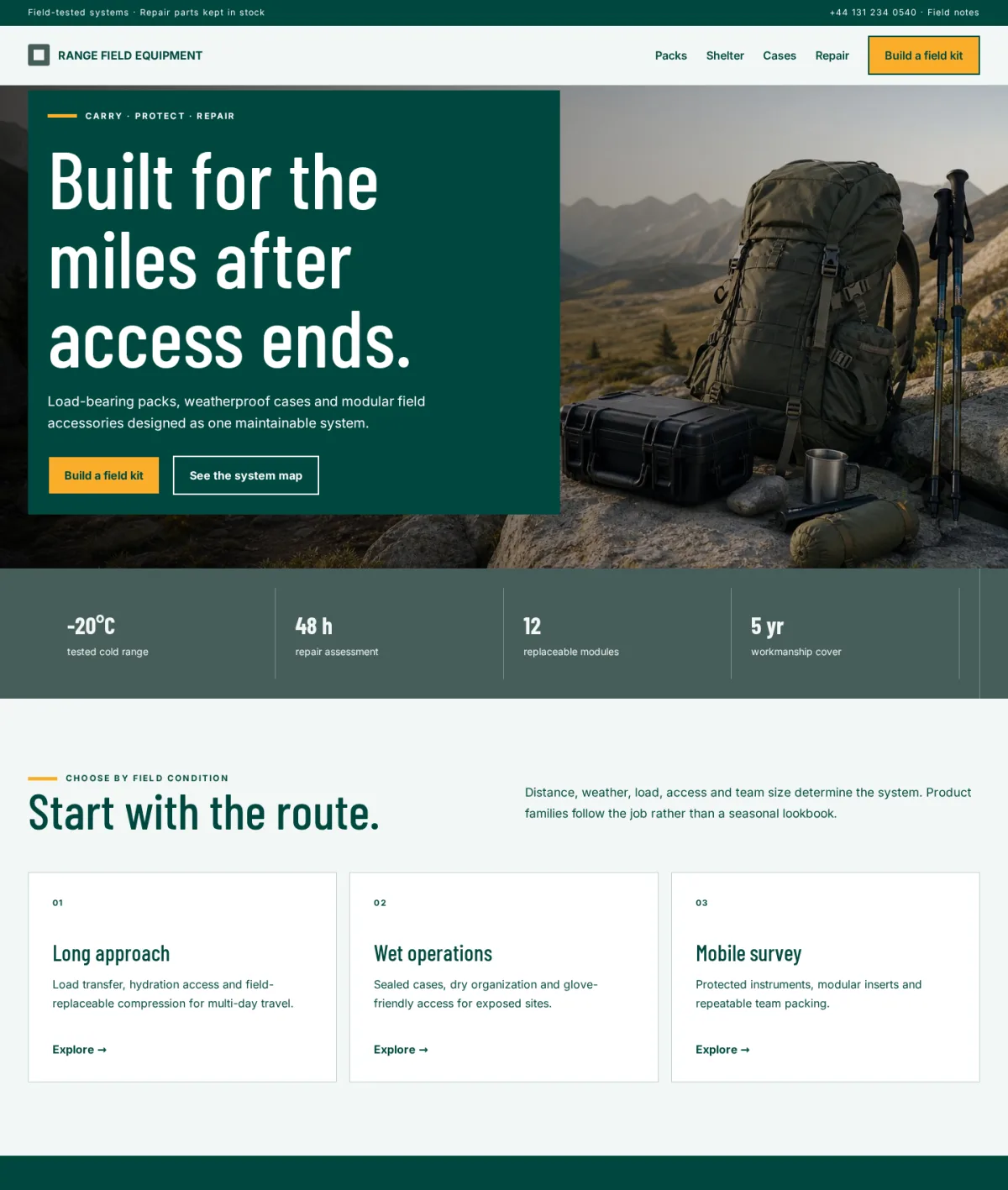
A technical outdoor equipment template organized by field conditions, compatible systems, fitting, maintenance, and repair
Range uses a dark green, pale ground, white, muted slate, and amber Happy Hues palette. A wide landscape establishes real use conditions, while product discovery starts with route, weather and load rather than lifestyle categories. Compatibility rows, repair pathways, and strong utilitarian typography turn the page into a field system guide. The simple square-ring mark echoes cases, modules, and map references.
Choose this template for an outdoor equipment brand, expedition supplier, technical pack maker, field-research outfitter, workwear company, rescue-equipment specialist, or repair-led gear business.
Replace the Range identity with the approved brand name and a simple transparent logo, plus a white version for dark footer and image areas. Keep the selected Happy Hues palette or map approved brand colors to semantic variables, then test contrast for text, links, product states, buttons, focus, errors, disabled controls, and hover behavior.
Replace the generated field image with licensed photographs of actual products in representative conditions. Use real product samples, correct configuration, trained models, appropriate safety equipment, location permissions, weather planning, and image releases. Do not use generated products, landscapes or people to imply real specifications, testing, customers, expeditions, safety performance, partnerships, or environmental practices.
Rewrite the hero around the true product system, intended users, operating conditions, region, warranty and service proposition. Every demonstration temperature, response time, component count and warranty term is fictional and must be verified or removed. Do not promise survival, protection, waterproofing, injury prevention, universal fit, guaranteed comfort, indefinite repairability, or performance beyond documented tests. Product pages should state intended use, dimensions, weight, volume, materials, finishes, hardware, load guidance, fit range, adjustment, compatibility, included and optional components, weather resistance, test method, care, repair, warranty, origin, price, tax, stock, lead time and delivery limits.
Use precise terms such as water-resistant, waterproof, submersible, breathable, insulated, flame-resistant, load-rated, food-safe or medical-grade only when the specification, test method, boundary and current evidence support them. Explain the difference between laboratory performance and field conditions. Fit guidance must not replace competent assessment for hazardous or professional use. Provide clear warnings for load, terrain, temperature, fire, water, wildlife, tools, batteries, fuel, sharp objects, climbing, rescue, child use and other relevant hazards. Compatibility pages should identify model generation, size, mounting point, load limit and exclusions; do not assume that similar dimensions make components safely interchangeable.
Care and repair pages should show inspection intervals, cleaning agents, drying, storage, wear indicators, spare-part codes, user-serviceable tasks, professional repairs and retirement criteria. Warranty pages need coverage, duration, proof of purchase, exclusions, wear, misuse, modifications, shipping, regional rights, remedy and turnaround expectations. Sustainability claims require defined material content, supplier evidence, manufacturing boundary, durability method, repair data, packaging, transport assumptions, take-back route and date. Avoid vague terms such as eco, sustainable, responsible, carbon-neutral or lifetime product without measurable scope.
Case studies and field reports require permission and should distinguish controlled tests, sponsored use, employee use and independent customer experience. Never invent endorsements, expedition partners, rescue teams, certifications, awards, test results, ratings, stock levels or customer counts.
For SEO, create substantial pages for real product systems, activities, fitting, compatibility, care, repair, warranty, field guides and service regions. Use unique titles and descriptions, canonical URLs, accurate availability, meaningful internal links and descriptive alternative text. Apply Product, Offer, Organization, HowTo, FAQPage or Article structured data only when visible content supports every property.
If multilingual, use qualified technical translators for specifications, warnings, warranty and care.
On mobile, keep product name, price, availability, key constraints, fit, compatibility and purchase action in a logical sequence. Allow tables to reflow or scroll without clipping and never hide safety information behind hover. Maintain semantic landmarks, heading order, keyboard access, visible focus, touch targets, zoom, high contrast, reduced motion, accessible galleries, labels and errors. Use secure commerce and explain payment, tax, shipping, returns, warranty, privacy and marketing consent.
Before launch, replace all fictional products, specifications, claims, images, contacts, links and policies; test purchasing, stock states, variants, failures, screen readers, keyboard use, mobile and ultrawide layouts, slow networks, reduced motion and browsers. Add reviewed privacy, cookies, terms, shipping, returns, warranty, product safety, recalls, repairs, accessibility, sustainability and contact pages with named product, safety, service, privacy, accessibility and content owners.