Alder Modular Homes
A modular-home brand template with configuration, model and floor-plan comparison, assembly, materials, site readiness, timeline, and costs
A modular-home brand template with configuration, model and floor-plan comparison, assembly, materials, site readiness, timeline, and costs
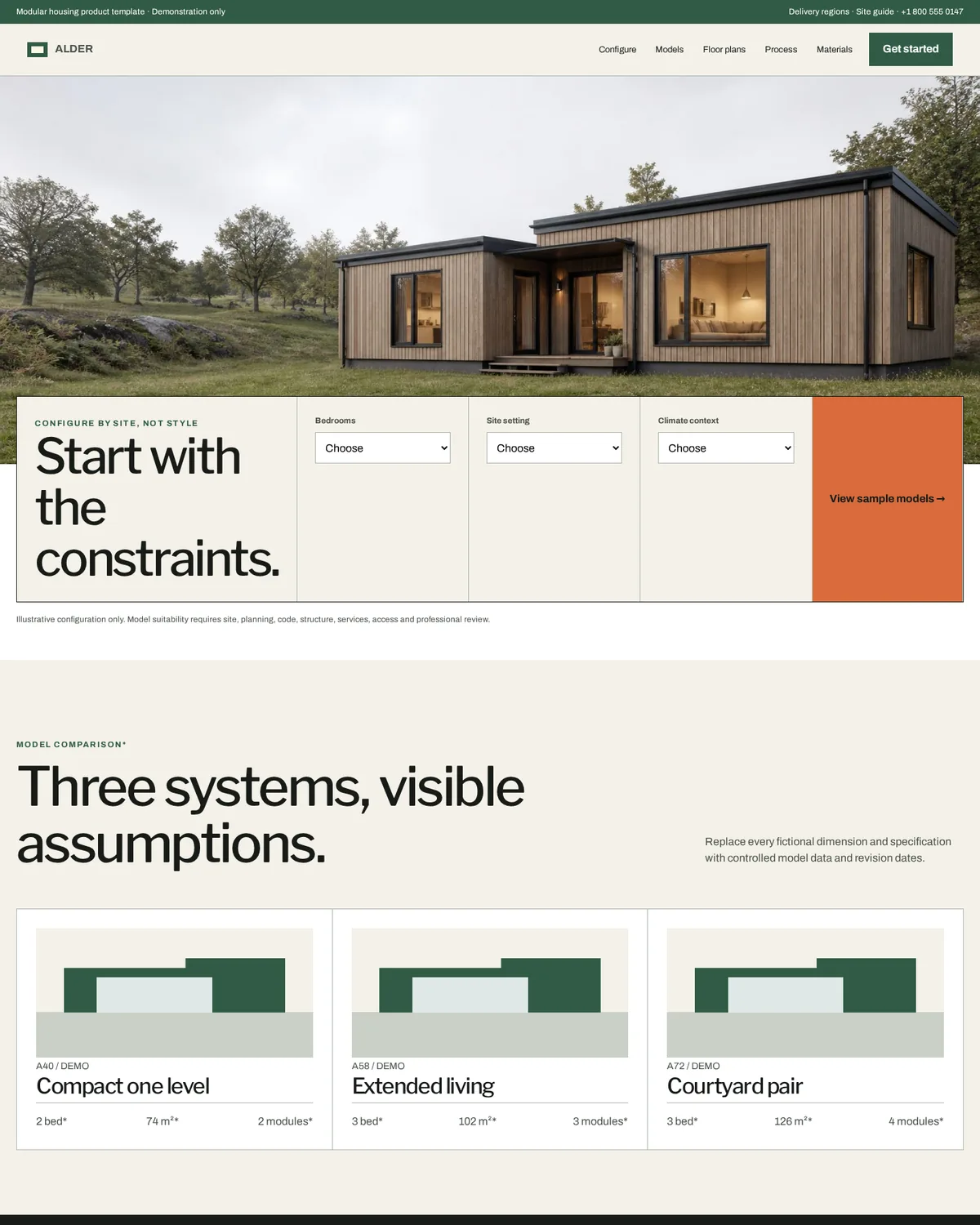
Alder begins with bedroom, site, and climate configuration beside an orthographic elevation and floor plan. Model comparison, six-stage assembly, plan selector, envelope ledger, completed interior, site checklist, timeline, cost components, and case study frame the home as an engineered product rather than a property listing.
Choose this template for a modular-home manufacturer, prefabricated architecture company, design-build firm, panelized construction brand, residential system provider, or housing-product studio.
Replace the Alder identity with a transparent logo and compact mark for plans, documents, mobile navigation, and the footer. Preserve the shared plan and image axes, consistent gutters, measured spacing, stable plan ratios, and restrained architectural palette. The configurator should narrow real models and options rather than produce an unreviewed quote or claim that a design suits every site. Model records should include stable name or code, floor area and measurement convention, bedrooms, bathrooms, stories, dimensions, modules, structural system, foundation assumptions, climate or code applicability, accessibility options, exterior and interior inclusions, energy approach, customization limits, indicative production range, lead time, delivery area, warranty, and revision date.
Floor plans must reflect actual models, show scale and key dimensions, and include a disclaimer that siting, code, structure, services, and final design require professional review. Assembly timelines should distinguish design, engineering, permits, site work, factory work, transport, craning, connections, inspections, finishes, and handover, including dependencies and factors that change timing. Cost components should define currency, date, location assumptions, inclusions, exclusions, taxes, permits, site work, utility connections, transport, crane, finishes, landscaping, escalation, contingency, financing, and quote validity.
Never describe a chart as transparent pricing if major costs are excluded. Claims about performance, efficiency, durability, fire, acoustic, indoor air, sustainability, local sourcing, waste, speed, code, warranty, or cost savings require evidence and applicable conditions. Never invent completed homes, clients, timelines, prices, certifications, plans, or outcomes. Replace all generated elevations, plans, interiors, construction, maps, and case-study images with accurate licensed project assets before launch. Generated architecture must not be represented as a buildable or delivered design. Keep dimensions, costs, schedules, materials, controls, and warnings in HTML or accessible plan files.
Alternative text should describe model, elevation, plan orientation, and visible spatial features.
Forms should collect minimal project information and use secure workflows for land documents, surveys, budgets, identity, financing, contracts, and technical files.
For SEO, create substantial pages for real models, plans, systems, materials, process, delivery regions, case studies, and guides. Use unique titles, descriptions, canonical URLs, logical headings, revisions, credits, and internal links. Apply Product, House, Offer, Organization, or Project structured data only when visible facts match. Avoid thin pages for every configuration.
If multilingual, localize dimensions, codes, currencies, taxes, contracts, construction terminology, and regional delivery.
On mobile, stack configuration controls, preserve plan legibility with accessible zoom or download, convert comparisons into labeled records, and prevent overflow. Maintain keyboard access, visible focus, strong contrast, large targets, reduced motion, screen-reader labels, and non-color selection states. Optional analytics, maps, 3D viewers, chat, scheduling, and financing tools should respect consent and financial privacy.
Before launch, replace all fictional models, plans, images, prices, timelines, projects, clients, and claims; test configuration, comparisons, plans, downloads, forms, consultation, keyboard use, screen readers, responsive layouts, performance, consent, and failures. Add reviewed privacy, terms, accessibility, design disclaimer, pricing, site, delivery, warranty, financing, sustainability, complaints, and contact pages, with architecture, engineering, estimating, legal, sales, and content owners and formal revision schedules.