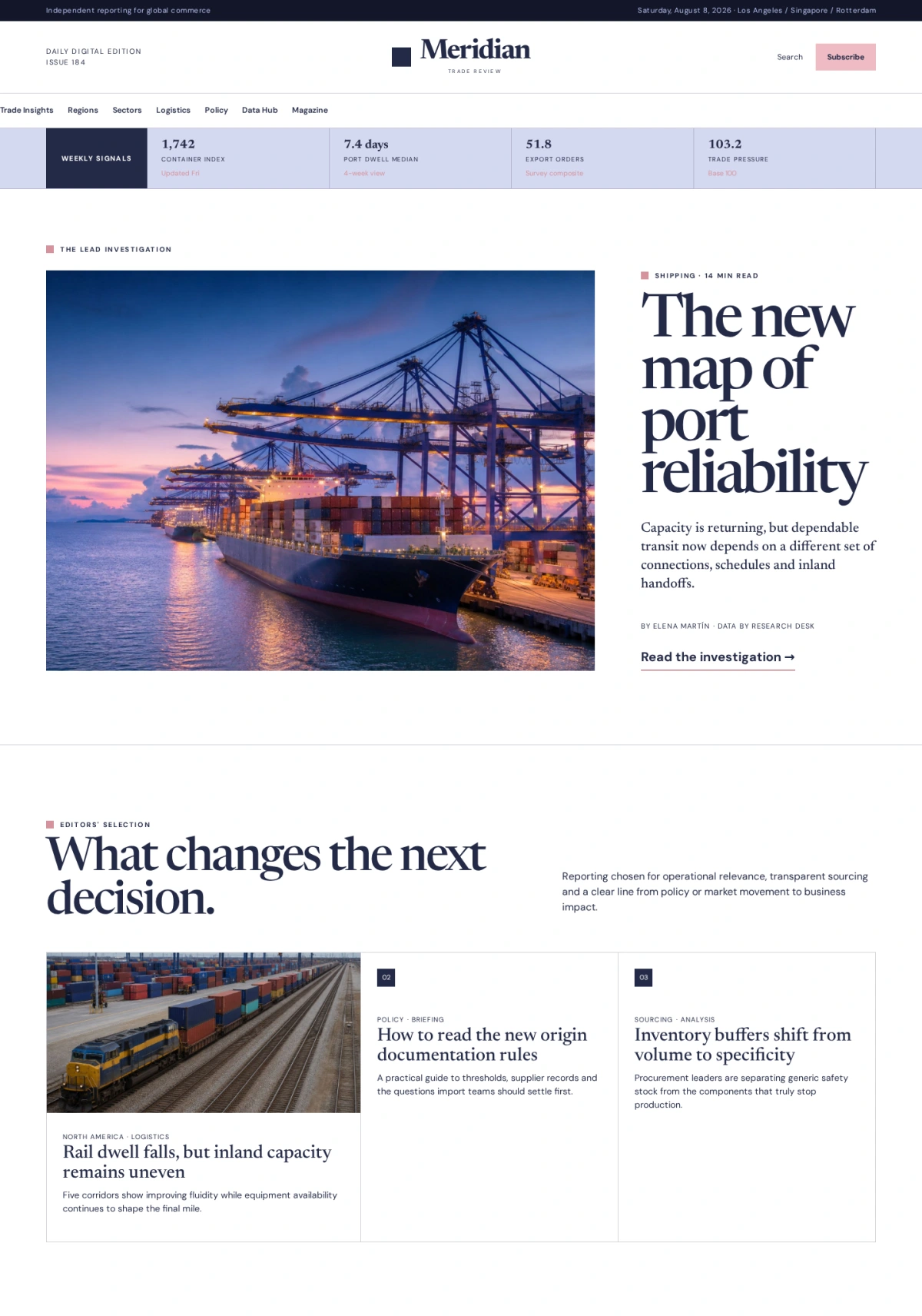
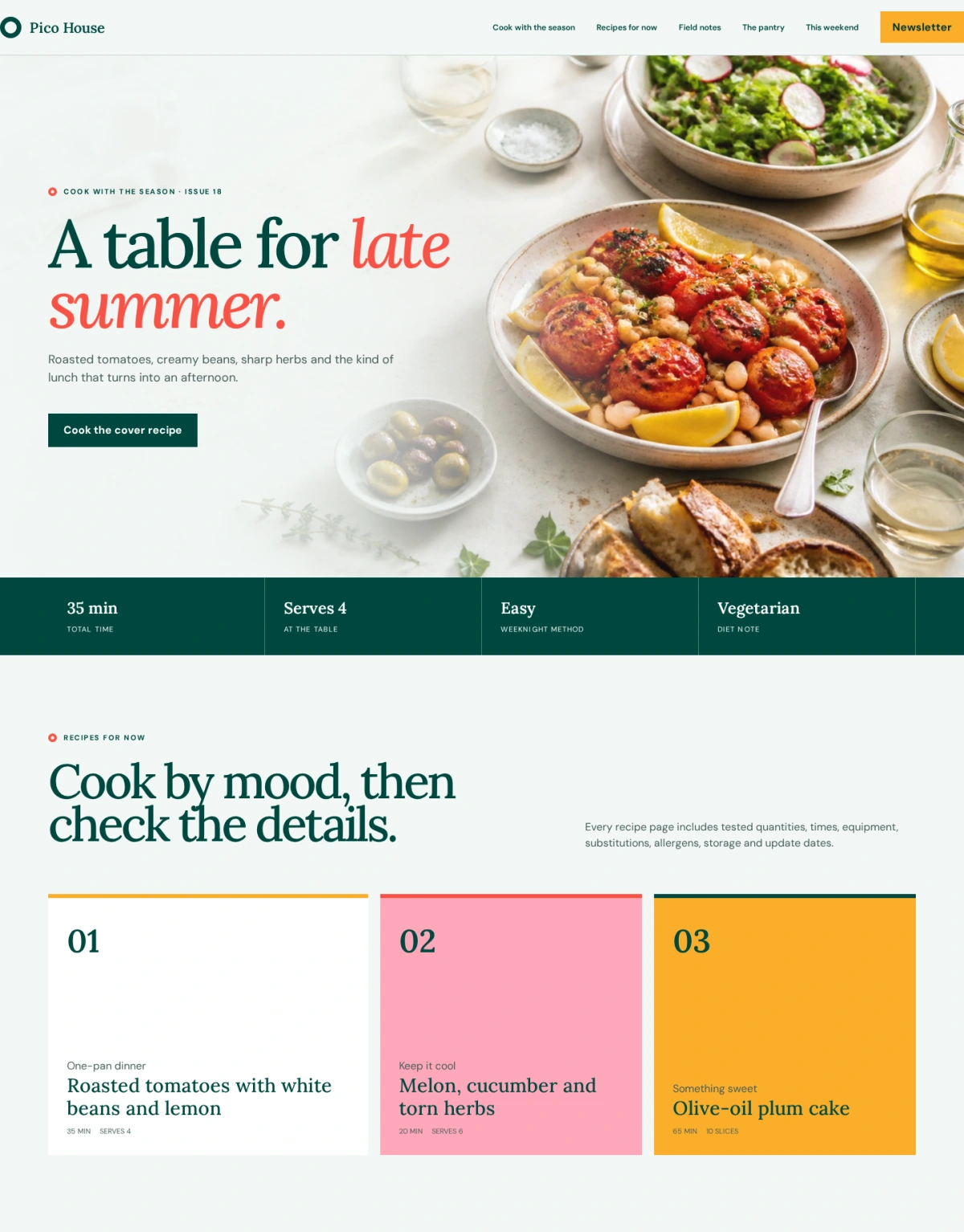
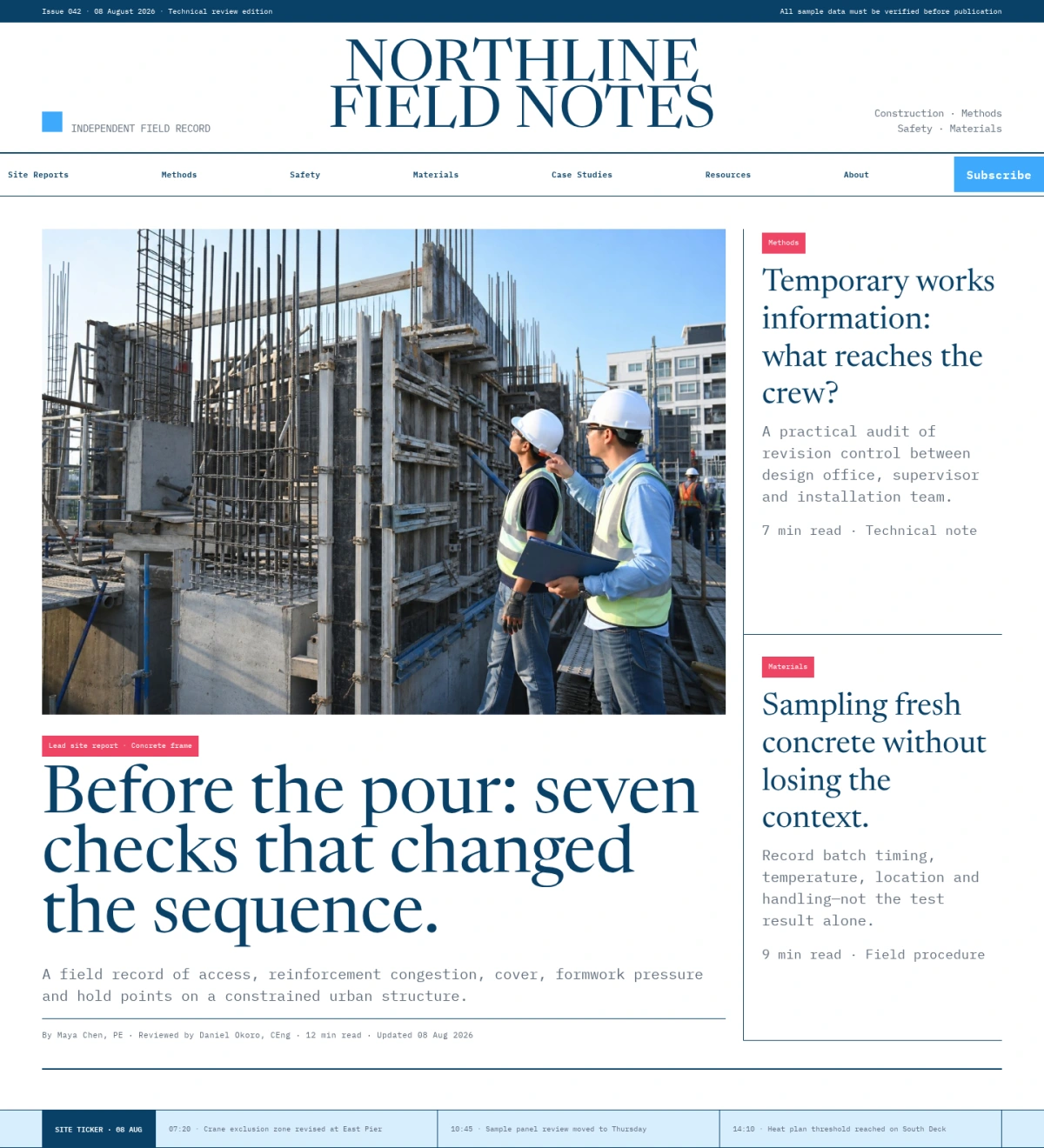
Grove Civic Bulletin
A civic newspaper blog template combining accountable local reporting, public meetings, notices, documents, and deadlines
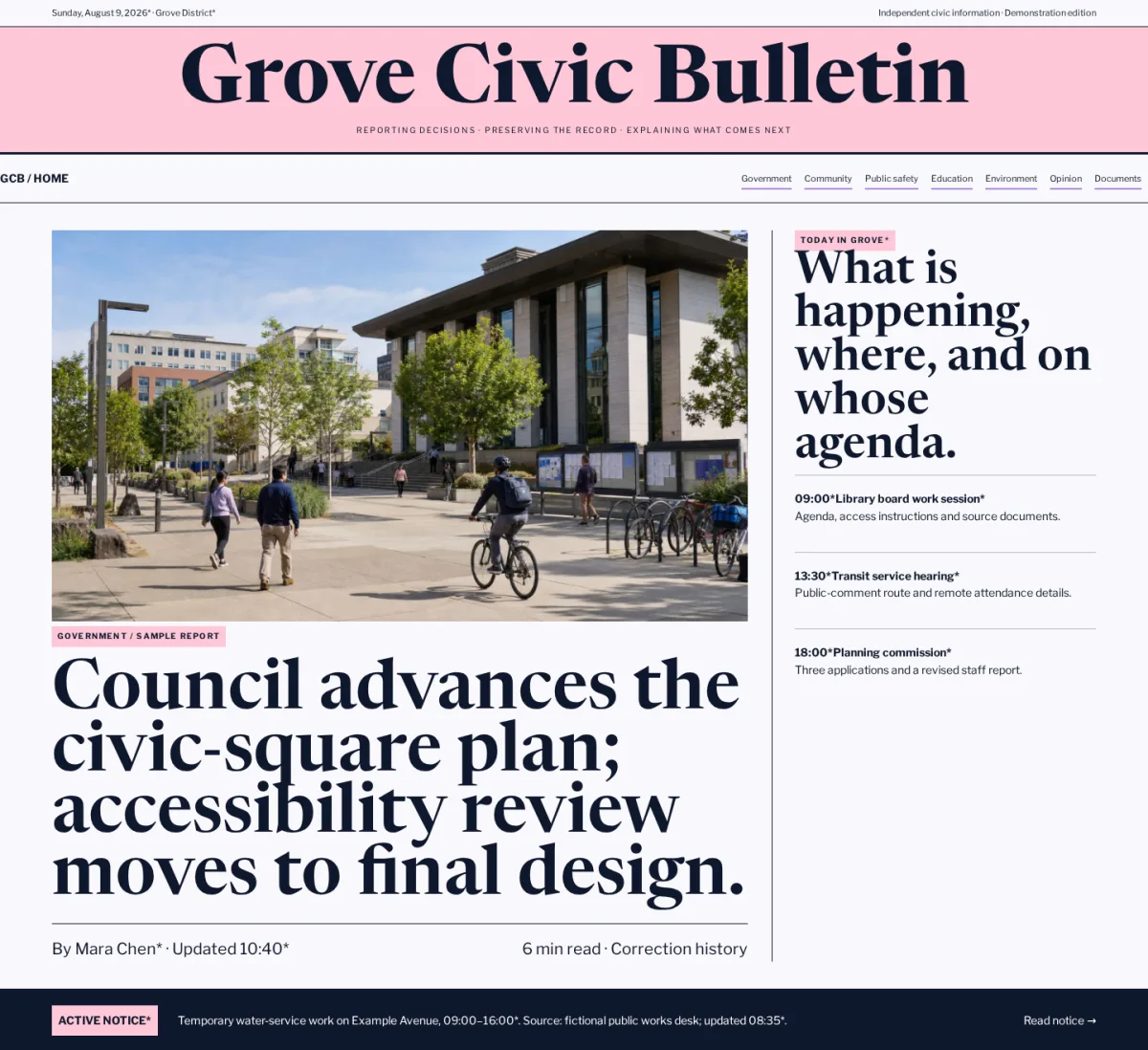
A civic newspaper blog template combining accountable local reporting, public meetings, notices, documents, and deadlines
Grove Civic Bulletin combines a formal masthead and issue-led newspaper cover with a same-day city agenda, source-stamped active notice, asymmetric reporting columns, public-meeting calendar, four-district ledger, community photo report, controlled document desk, and action deadlines. Its typographic civic hierarchy and dense rule-based grid are visibly different from a commercial blog while remaining orderly, responsive, and Bootstrap-compatible.
Choose this template for an independent local newsroom, municipal bulletin, neighborhood publication, civic accountability project, public-interest nonprofit, or community information service.
Replace the Grove identity with a transparent publication mark and prepare compact versions for mobile, newsletters, and social previews. Preserve the masthead hierarchy, shared column edges, predictable gutters, table alignment, and restrained notice colors. The page should feel like a maintained publication, not a collection of promotional cards. Set a clear editorial mission, geographic scope, corrections policy, ownership statement, funding disclosure, contact route, and distinction between reporting, opinion, official notices, sponsored content, and reader submissions. Every article should include an accurate headline, author, publication and update times with timezone, topic and district taxonomy, source context, image credit, and correction history where relevant.
Meeting calendars must identify the responsible body, date, time, location or remote-access method, agenda, accessibility arrangements, public-comment procedure, and source link. Urgent notices require an authoritative source, affected area, effective period, update time, and expiration rule; never use alarming colors for stale or unverified information. Public documents need exact titles, issuing bodies, dates, file types, sizes, accessible formats, and archive handling. Deadlines should explain eligibility, required action, governing authority, and consequences without providing individualized legal advice.
Verify election, emergency, health, tax, licensing, education, and public-safety information against primary sources and label explanatory reporting separately from official guidance. Do not invent votes, quotations, officials, events, public records, statistics, sponsors, or community testimonials. Replace all generated civic photographs before publication with licensed, accurately captioned reporting images. Obtain permissions when required, protect minors and vulnerable people, and do not expose addresses, license plates, records, or personal details without a justified editorial basis. Keep headlines, notices, agendas, dates, document metadata, and actions in HTML.
Provide descriptive alternative text and full text or accessible equivalents for charts and scanned documents.
For SEO, create durable topic, district, institution, election, and public-service landing pages with unique titles, descriptions, canonical URLs, headings, update information, and useful internal links. Avoid indexing empty tag pages, transient query combinations, or copied press releases without added value. Use NewsArticle, Article, Event, or Dataset structured data only when visible facts match.
If multilingual, publish complete native-language information, including emergency notices, dates, agency names, access instructions, and corrections.
On mobile, preserve headline order, convert agendas and document tables into labeled records, keep notices readable, and avoid horizontal overflow. Support keyboard access, visible focus, large touch targets, skip links, screen-reader landmarks, reduced motion, and non-color status cues. Newsletter and tip forms should explain recipients, security limitations, retention, and response expectations; confidential sources need a separately assessed secure channel. Optional analytics, advertising, video, maps, and social embeds should respect consent and editorial independence.
Before launch, replace all fictional names, dates, officials, addresses, notices, photographs, documents, and claims; test navigation, search, archives, calendars, filters, subscriptions, forms, corrections, keyboard use, screen readers, responsive layouts, performance, consent, and failure states. Add reviewed privacy, terms, accessibility, corrections, ethics, funding, advertising, submissions, records, and contact pages, with named owners and review schedules for urgent information.