Woven Aid Network
A humanitarian response template with regional needs, fund allocation, operational updates, partner transparency, and accountability
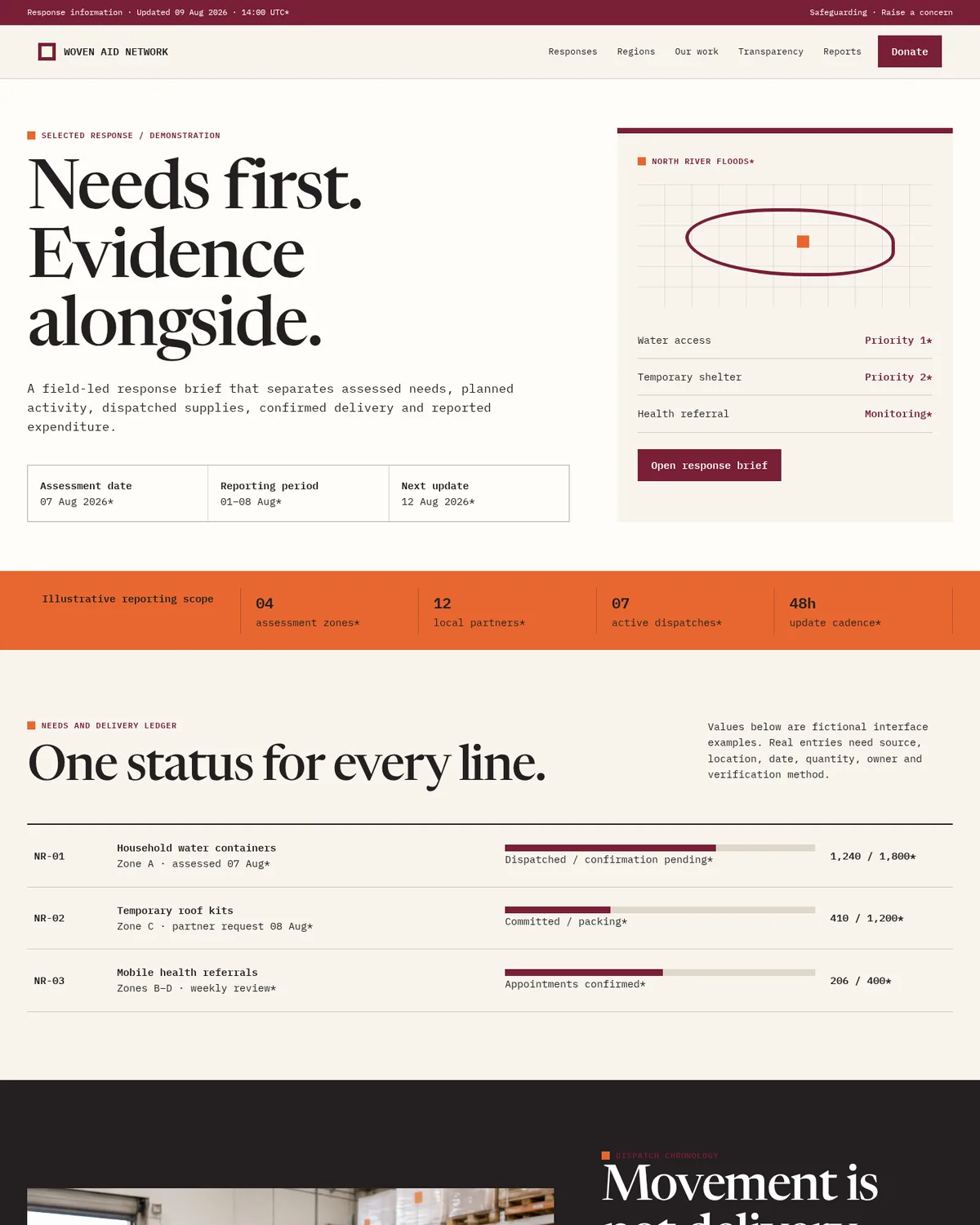
A humanitarian response template with regional needs, fund allocation, operational updates, partner transparency, and accountability
Woven Aid Network places a selected emergency response beside a bounded needs map, then exposes live needs, allocation, response chronology, regional updates, logistics, partners, documents, donation use, safeguarding, and reports. The transparency-led structure avoids emotional campaign collage and unsupported counters.
Choose this template for a humanitarian nonprofit, disaster-response organization, relief network, community aid coalition, international development group, or transparent emergency appeal.
Replace the Woven Aid identity with a transparent logo and compact field mark for the utility header, reports, and mobile navigation. Preserve the aligned data tables, shared container edges, consistent gutters, restrained urgency colors, and clear separation between needs, activities, finance, and donation actions. Current-response pages should identify the event, geography, affected period, assessment date, data source, responsible team, priority needs, affected population methodology, response scope, funding requirement, delivery limitations, safety context, local coordination, update cadence, and closure or transition criteria.
Clearly distinguish verified needs, estimates, plans, commitments, dispatched supplies, delivered assistance, and independently confirmed outcomes. Never describe model-generated or stale data as live. Fund-allocation ledgers need currency, reporting period, restricted and unrestricted treatment, categories, commitments versus expenditure, overhead methodology, exchange-rate policy, audit status, and links to formal reports. Donation explanations should state designation rules, surplus treatment, refunds, tax status, fees, recurring terms, receipts, and what example amounts do and do not guarantee.
Partner logos and local leadership claims require permission and an accurate description of roles. Safeguarding, complaints, do-no-harm, procurement, anti-fraud, sanctions, data protection, and independent oversight should link to actual policies and reporting channels. Claims about people reached, shelters, shipments, speed, efficiency, local leadership, ratings, registration, or tax deductibility must be evidenced and scoped. Never invent crises, needs, beneficiaries, field reports, partners, metrics, charity badges, or endorsements.
Replace generated maps, responders, affected communities, logistics, and field images with authoritative data and rights-cleared documentary assets before launch. Obtain informed consent, preserve dignity, minimize identifying details, and never stage or use vulnerable people as emotional proof. Keep numbers, dates, places, status labels, sources, documents, and donation controls in HTML. Alternative text should remain factual and avoid inferring trauma or dependency.
Forms should collect minimal information and use secure systems for donations, beneficiary data, partner due diligence, safeguarding reports, volunteers, and sensitive field documents.
For SEO, create substantive pages for verified responses, regions, programs, methodologies, policies, reports, partners, and educational resources. Use unique titles, descriptions, canonical URLs, logical headings, authors, source dates, and internal links. Apply NGO, Organization, DonateAction, Report, Article, or Dataset structured data only when visible facts match. Prevent rapidly changing filters and private reports from creating thin pages.
If multilingual, localize urgent guidance, place names, currencies, dates, donation terms, complaints, and safeguarding routes with local review.
On mobile, convert tables into labeled records, provide map alternatives, keep donation controls usable, and preserve source context. Maintain keyboard access, visible focus, strong contrast, large targets, reduced motion, screen-reader labels, and non-color severity cues. Optional analytics, maps, payment, video, and social embeds should respect consent and vulnerable-user privacy.
Before launch, replace all fictional crises, maps, data, partners, reports, images, badges, contacts, and claims; test response selection, reports, donations, receipts, forms, complaints, keyboard use, screen readers, responsive layouts, performance, consent, and failures. Add reviewed privacy, terms, accessibility, safeguarding, complaints, fundraising, financials, anti-fraud, sanctions, procurement, data, and contact pages, with field, finance, safeguarding, legal, privacy, and content owners and frequent review schedules.